• Skip to primary navigation
  • Skip to main content
  • Skip to primary sidebar
  • Skip to footer

HalloweenMovies™ | The Official Halloween Website

  • NEWS
  • FEATURE ARTICLES
  • FILM SERIES
  • MERCH
  • EVENTS
  • IN THEATERS

Friday the 13th Part 2

EXCL: On Its 25th Anniversary, Writer Daniel Farrands Looks Back at Halloween: The Curse of Michael Myers – Part 1

September 29, 2020 by Sean Decker

“It’s shocking, as it doesn’t seem that much time has passed!” Halloween: The Curse of Michael Myers writer Daniel Farrands told us when he recently sat down with HalloweenMovies to discuss the film, his attachment to it, and its legacy on its 25th anniversary.
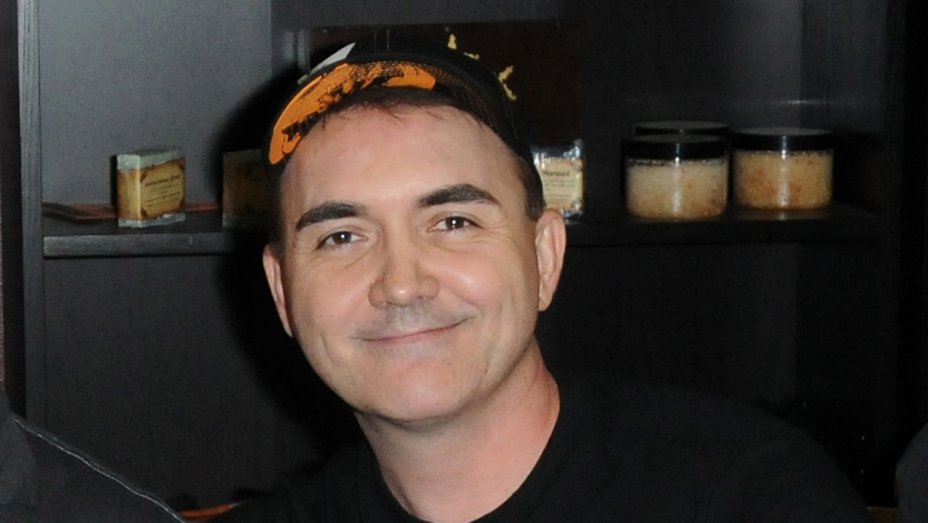
Daniel Farrands

Released on September 29, 1995, the Trancas International Films, Miramax and Nightfall Productions-produced Halloween: The Curse of Michael Myers continues to engender conversation to this day. A direct follow-up to 1989’s rather rushed-into-production Halloween 5: The Revenge of Michael Myers (an entry which presented more questions than it answered), the sixth film in the Halloween franchise, released by the newly-launched Dimension Films, inarguably polarizes fans to this day.

Perhaps unsurprisingly, the production of Halloween: The Curse of Michael Myers proved a bit of a challenge for all involved, from conception and development through its production and post, which included shifting budgets and narrative disagreements, to clandestine reshoots and  studio meddling.

But how did Farrands, a horror fan with an undying love of the Halloween film series, who heralded in part from Santa Rosa, California (a then bucolic town notable to slasher fans for its school system’s famous rebuff of Wes Craven’s Scream production), get involved?

As we found, it’s a bit of a “small town kid makes good” story, and one which should prove both inspirational and educational to horror filmmakers eager to follow their dreams, and fascinating to Halloween fans alike.
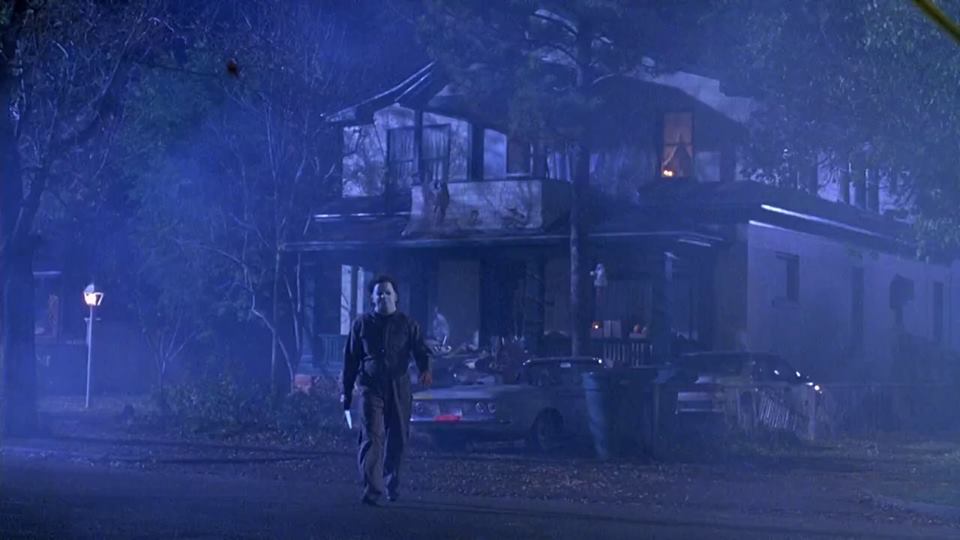
Halloween: The Curse of Michael Myers

EARLY BEGINNINGS

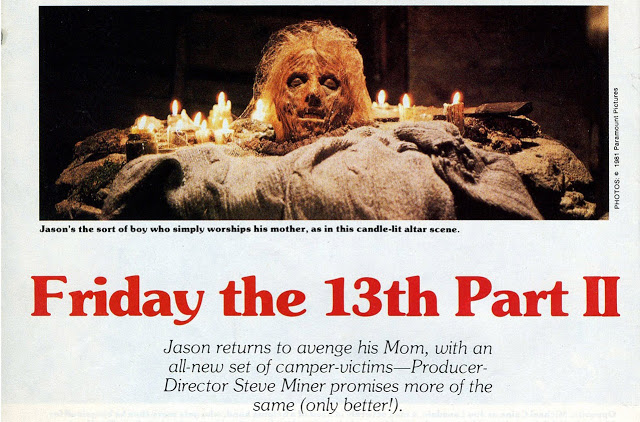
“I was raised in a strict, Catholic household,” Farrands told us of his early childhood in the ‘80s in the northern California enclave of Santa Rosa, California, “and because of that, horror movies were simply taboo, even pre-VHS. But of course, I found a way to see them. The first R-rated horror film I saw was in 1981, and it was Friday the 13th Part 2, which a neighbor of ours named Kathy Dunn, who was in 12th grade and who was babysitting me, took me, after much cajoling and maybe blackmailing, to a Saturday matinee to see. I was in sixth grade at the time, and to say the least I was terrified!”

“And it all stemmed from the fact that her older brother had these magazines that I’d never seen before: Fangoria,” he continued. “Kathy would sneak them out of his room for me to look at, and it was like experiencing a Playboy for the first time, because I knew they were something I wasn’t supposed to see. And I can still recall vividly the first picture I saw within those pages. It was a still from Friday the 13th Part 2, a shot of Mrs. Voorhees’ severed head in the refrigerator, and I looked at it in horror, and then immediately said to Kathy, “You have to take me to see this movie! I’ll never tell my mom!”
Fangoria Issue #12

“And so,” Farrands chuckled, “because she was kind of a bad babysitter, she took me to see the film, and that horrified me even more than the magazine. I truly felt that I had seen the face of hell, and that I was never going to be the same.”

“And then,” he paused, “came Michael.”

As Farrands recalls, his first introduction to the iconic character of Michael Myers occurred later that same year, when John Carpenter’s immortal classic Halloween aired, albeit edited, on television as an NBC “Movie of the Week.”

Armed with the then-new technology of VHS, Farrands set out to both watch and to record it.

“We were some of the first families on the block to get a VCR,” remembers Farrands of the device, which at the time was duking it out with its rival, the Betamax. “So, I considered myself lucky. And I sat in the corner of our couch with a remote control, so that I could record it without the television commercials, which I thought was important, and with the pillows piled high around me so that I could peer through them, because I was at once both utterly horrified and exhilarated by the film. And at the end of the airing, I had a VHS copy of Halloween! And that was truly the beginning of my absolute obsession with horror, and with the Halloween series.”

“And that obsession grew the very next week,” Farrands effused, “when Halloween II opened in theaters! It was playing at the Coddingtown Mall in Santa Rosa, and there was no way that I wasn’t going to see it. I told my mom I’d go on a hunger strike if she didn’t take me. So, she did one of those things moms did in the ‘80s: she dropped me off at the movies. I recall that it was a rainy, Saturday afternoon, and that I literally had tears of joy while watching Halloween II, and also that at that moment I had the epiphany that it was what I needed to do with my life: make horror movies.”

Having already written and directed plays and skits during his elementary school days (roping his friends into the process), as well as shooting short films on Super 8 (also starring his school-yard chums), the die was cast early for Farrands, whose interest in filmmaking continued to flourish as he grew, both during his time at Rincon Valley Junior High and then later at Santa Rosa High School.

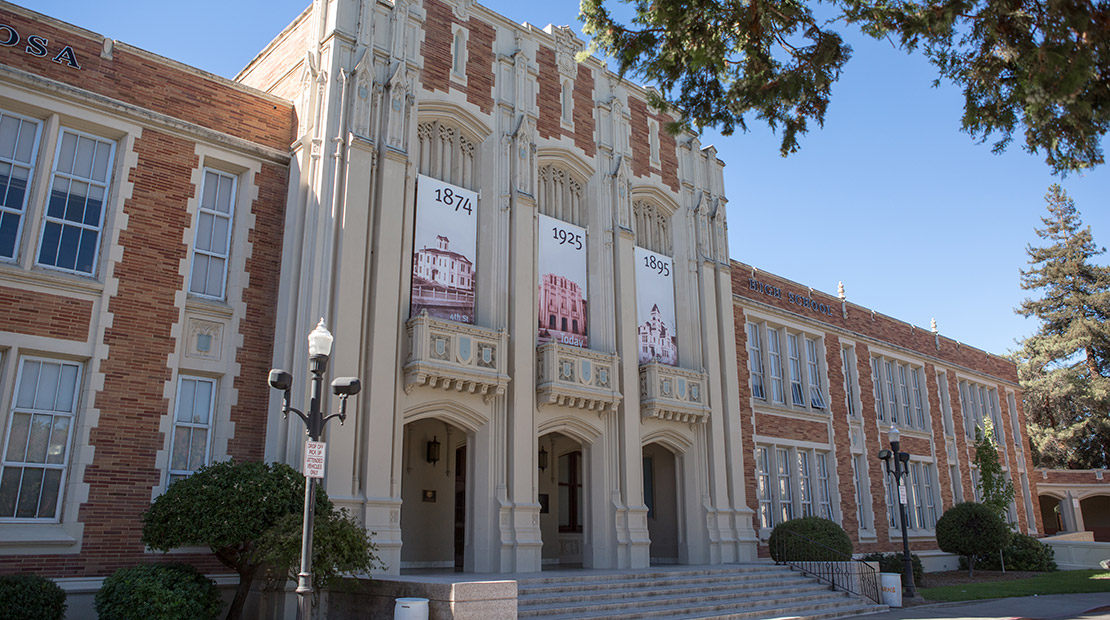
“I look back on those years fondly,” said Farrands, “and my corralling of groups of kids, some of whom probably didn’t like me, just to make blood-drenched films in the school’s hallways. Which later I found ironic, because when Wes Craven attempted to shoot the original Scream there many years later  — Santa Rosa High first accepted the production, but the Santa Rosa City School District Governing Board then denied it. They literally banned the production because of the script’s violent content!”
Santa Rosa High

“And as that happened right on the heels of Halloween: The Curse of Michael Myers, and as Dimension Films was behind both films, a Dimension executive – having gotten wind that I’d gone to Santa Rosa High – asked me to call the school, and to try to talk some sense into them. But what was I going to say? The school board just didn’t care.”

“Many years later, when I was shooting the 2011 documentary Scream: The Inside Story, I returned to Santa Rosa High School in order to interview the board members, and I said to them, ‘You know how interesting it is to me that you banned Wes Craven, a very respected filmmaker, from making a horror film here, when as a student I literally dragged headless, blood-gushing human props up and down these hallways while making my own short films?’”

“But I’m getting ahead of myself,” he continued. “Before any of that, as a kid, I just wanted to make films. And you know, my life as a teenager revolved around it.”

Catching endless horror films in both wide distribution at local cineplexes and otherwise (the latter at Santa Rosa’s Park Cinema, known for screening indie horror flicks one couldn’t see anywhere else) and purchasing the latest issues of Fangoria in downtown Santa Rosa’s sketchy “Anarchy Alley” (a backstreet frequented by mohawked punks and ‘80s counter culture misfits, who Farrands mused about casting in a film he conceived but never shot humorously called Escape From Santa Rosa), Farrands’ path to Hollywood was forming.

“So yeah, to say that John Carpenter’s Halloween, and his other films of the time, influenced me, is an understatement,” mused Farrands, who like many a young cinephile worked over a summer in a local theater, which allowed him to more efficiently consume ‘80s fright fare. “I can’t express enough how absolutely life-changing Carpenter’s movies were to me personally. They helped me through difficult times and were also personally inspirational. You know, as a teen, you are thinking about becoming an adult and about, ‘What will my life be?’ And for me, I think the reason that people succeed at things is because they believe they really didn’t have any other choice. And I think that’s kind of what it was for me. I didn’t really give myself something else to fall back on. There was no other option (than film).”

Farrands’ first stab at Hollywood (years prior to moving to Tinsel Town, where he’d eventually become part of the Halloween franchise) came at the young age of fourteen, when he boldly decided to personally reach out to the producers of that other slasher franchise, Friday the 13th, in order to tell them exactly what he wanted to see in the fourth installment.

“I decided that I needed to write the next Friday the 13th movie,” Farrands recalled with a laugh, after having seen 1982’s Part III in 3D, “and I needed to let the producers of that franchise know that I was there for them. So, somehow I found the address of the production office of Frank Mancuso, Jr., who was the producer of those films, and I typed him a letter over Christmas vacation, explaining in great detail what Friday the 13th Part 4 should be, and I mailed it off. Well, a few weeks later, I opened my mailbox, and there was an envelope in it with a return address that read: Friday 4 Incorporated! And I opened it, and inside there was a type-written one-page letter with a signature at the bottom that read ‘Frank Mancuso Jr.’ And the letter said, ‘Even people twenty years your senior do not write like this, and I had to pass your letter around my office to see if this could be real. This is the first time I’ve responded to anyone about Friday the 13th, and I think you have talent. I think you are smart. I think you have passion. And I think that that is the foundation of this industry, so let me be the first to welcome you.’”
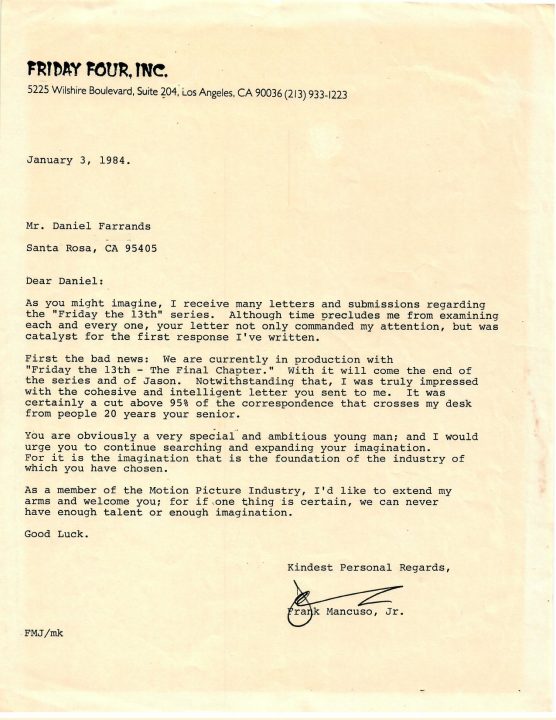
“To this day, I have that letter framed in my office,” said Farrands, “and it will always be there, as long as I’m alive, because that for me was the moment when things became tangible. The moment filmmaking became doable. And that I could make it happen.”

Four years later, many horror film screenings later and upon graduation from Santa Rosa High School, horror fan Farrands packed up his 1978 Datsun 200SX and set off for Hollywood, and onto his journey to Halloween: The Curse of Michael Myers.
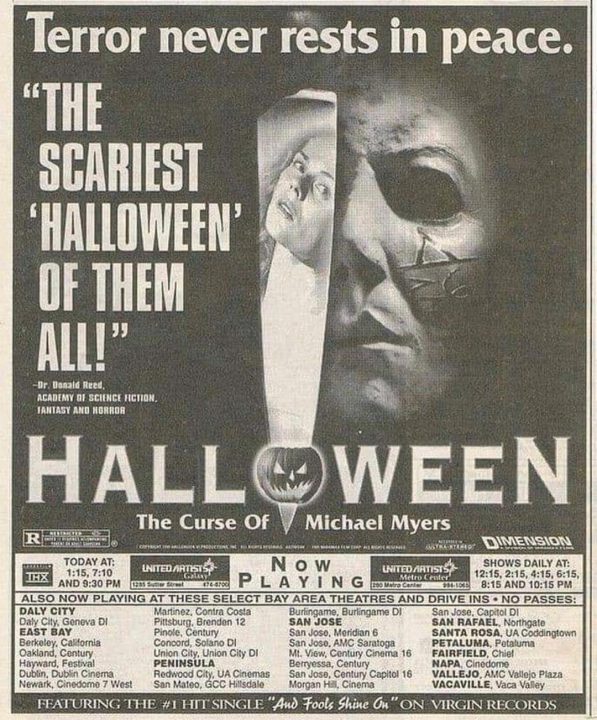
You can find part two here, in which we discuss his path to Michael Myers, his initial meetings with Halloween series producer Moustapha Akkad, and his script originally titled Halloween 666.

_

Writer’s note: this interview has been lightly edited and condensed for clarity.
Filed Under: FEATURED, Halloween: The Curse of Michael Myers Tagged With: Daniel Farrands, Fangoria, Friday the 13th Part 2, Halloween, Halloween: The Curse of Michael Myers, Michael Myers, Miramax, Moustapha Akkad, Nightfall Productions, Trancas International Films

Exclusive Interview: Halloween 5’s Don Shanks Speaks! – Part 2

April 2, 2019 by Sean Decker

In 1989, director Dominique Othenin-Girard’s Halloween 5: The Revenge of Michael Myers polarized Halloween fans. From the introduction of the character of the Man in Black and the early beginnings of The Cult of Thorn mythos to a psychic connection between uncle and niece, this fifth film in the franchise (and the fourth which followed the iconic character of the babysitter-slashing Myers, who first found fame in originator John Carpenter’s seminal 1978 horror classic Halloween) was indeed a departure from its predecessors.

But what of the man who donned the infamous coveralls and mask for this fifth entry? Thirty years since its release, we caught up with stuntman and actor Don Shanks to discuss his experience working on the film, and touched on topics ranging from the film’s alternate ‘Dr. Death’ opening and deleted scenes to working with young lead Danielle Harris, as well as his prolific career in the film and stunt industry, navigating Hollywood as a Native American, and a whole lot more.

Commencing with his role of Nakoma in the 1974 film The Life and Times of Grizzly Adams and kicking into high gear in 1977 in the hit television series of the same name (you can dig deep into Shanks’ beginnings in Part 1 of our interview series here), Shanks told us that prior to Halloween 5 he’d cut his teeth on an entirely different slasher film, the 1984 flick Silent Night, Deadly Night.

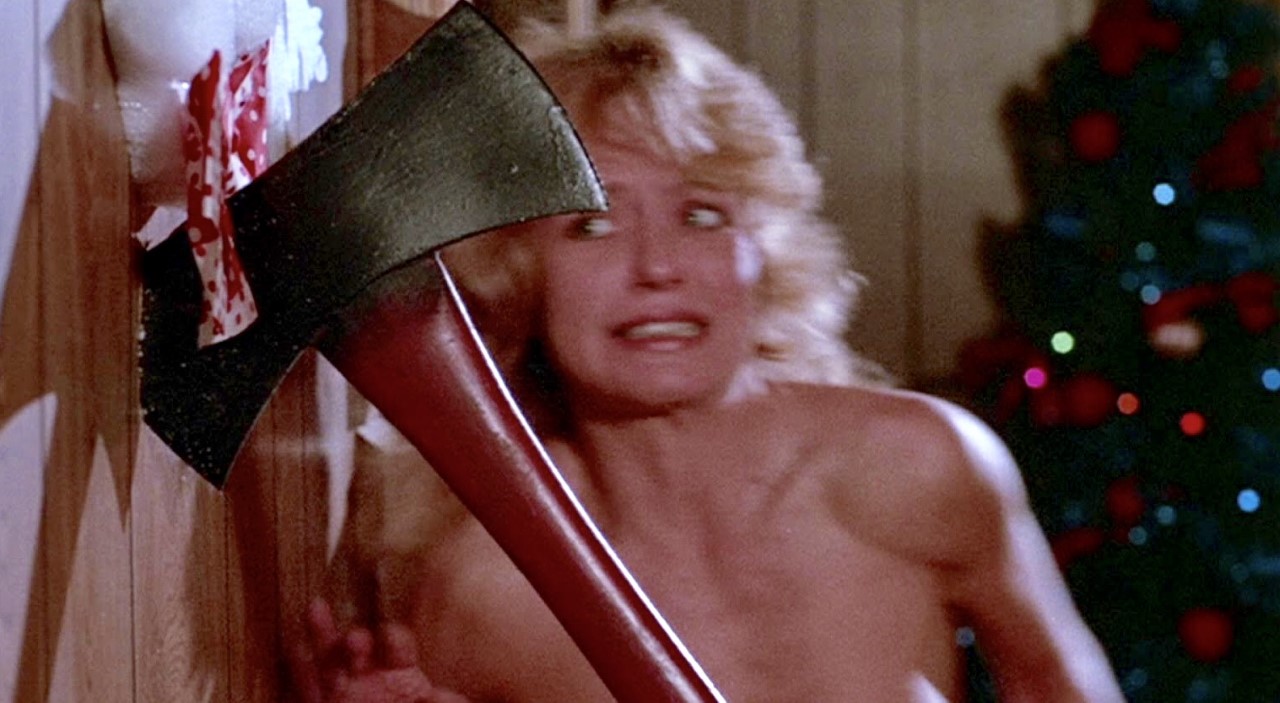
“I was in that film quite a bit,” Shanks offered of the movie, which went on to generate four sequels and the 2012 loose remake Silent Night. “A friend of mine was the stunt coordinator on it and he brought me on to double the Santa.”

Directed by Charles E. Sellier, Jr. (who Shanks had worked with on the Adams films and television series years prior), Silent Night, Deadly Night was written by Paul Caimi, and revolves around the character of Billy, who after seeing his parents murdered as a child at the hands of a Santa Claus suit-wearing criminal, goes on a Yuletide spree-killing of his own some years later.

Cashing in on the holiday-themed slasher craze of the time (its predecessors included Bob Clark’s underrated 1974 film Black Christmas and of course 1978’s immensely successful Halloween, as well as their imitators My Bloody Valentine, Friday the 13th Part 2, The Burning and dozens of others), the production too decided to give their killer a narratively related look. Thusly, Silent Night, Deadly Night’s Billy was presented as a none-too-family-friendly axe-wielding Saint Nick, much to the outrage of parents everywhere.

“Everything with the axe was me, and I did all of the stunts required of Santa Claus,” recalled Shanks of his work in the film, which also required him to double many of Santa’s victims as well, “and (often) we were using real axes.”

Of one of those moments when Shanks was asked to use an actual edged weapon, “We were doing one scene with Linnea (Quigley) where she runs to the telephone and (the character of) Billy throws his axe at her, and they wanted me to cut the telephone cord next to her with the axe,” Shanks offered. “I said, ‘That’s a little too close to her for me. There’s a snowman (decoration) right next to her. Let me throw it at that.’ So I first did it with a rubber axe, which didn’t stick and just knocked the fake wall down. So they fixed the wall, and I did it again, and the second time the axe splitt the snowman and it stuck (in the wall).”

 “After the take Linnea said, ‘That was really amazing!’” recalled the actor. “And I said, ‘Well, you know I throw knives and tomahawks.’ And she said, ‘Yeah, but how do you get a rubber one to stick in the wall?’ And I said, ‘The second one wasn’t rubber! They didn’t tell you that I was going to be throwing a real axe at you?’ And she said, ‘No, they didn’t.’”

Linnea Quigley in Silent Night, Deadly Night.
As it turns out, scantily-clad women weren’t the only ones on Santa’s “naughty list” in Silent Night, Deadly Night.

“In another scene, this kid steals a toboggan and is sledding down a hill,” continued Shanks. “So we had a stunt guy wearing a prosthetic head double the kid, and we put a ghost neck on the top of his own head and built his shoulders up, and I took the real axe and cut his (prosthetic) head off with it. So like I said, we were using real axes.”

 Such holiday mayhem was the cause of much controversy on November 9th, 1984, when the film was released to theaters. Lambasted by critics and picketed by parental groups for its content (and television trailers, which aired during hours of family-friendly programming), the TriStar film was pulled from theaters six days into its release. (Wes Craven’s A Nightmare on Elm Street was incidentally released the same day – to less vitriol and far more fanfare).

In the years following Silent Night, Deadly Night, Shanks found work in the television films Louis L’Amour’s Down the Long Hills and Stranger on My Land, as well as the television series Werewolf, before landing the role he’s most known to genre fans for: that of The Shape in 1989’s Halloween 5: The Revenge of Michael Myers.
Of that casting, Shanks recalled, “What it was, was that I had worked with stunt coordinator Don Pike. We had done a CHiPS episode together and had become kind of friends, and then later I was here in Salt Lake City, and he called me and said, ‘We’re doing this movie and I wanted to know if you were available to do stunts.’ I go, ‘Yep, sure.’ And so he calls me back ten minutes later and says, ‘The director would like to talk to you.’ I asked, ‘About doing stunts?’ He says, ‘Well, we’re doing Halloween 5 and we’re considering you to play Michael Myers.’ I go, ‘That’s cool.’ So I went in and talked to (the director) Dominique, and after a little bit he says, ‘I want you to walk for me like wood through water.’ I thought about it for a minute, and then I did it, and he said, ‘OK, perfect.’”

 “And that’s how I got the role.”

Don Shanks Unmasked in Halloween 5: The Revenge of Michael Myers

 With its predecessor Halloween 4: The Return of Michael Myers having released to box office success in October of 1988, the series’ producers were eager to duplicate that with an October 1989 follow-up, and thusly, Halloween 5 was moved quickly into production. Ideas pertaining to the continuation of the storyline varied wildly. A first draft by Shem Bitterman followed Alan B. McElroy’s established conceit and found the character of Jamie Lloyd to have become pure evil, following the stabbing of her stepmother in the finale of Halloween 4. That concept was however rejected by producer Moustapha Akkad, who felt that fans’ interest lay in the story of Myers (given the box office disaster that was the Myers-less Halloween III: The Season of the Witch, his concerns were warranted). Ultimately, writers Bitterman, Michael Jacobs and director Othenin-Girard all found writing credits on the shooting script, in a story which picked up directly where the previous film had left off: with Myers falling into a mine shaft beneath a hail of gun fire.

“We started filming a week and a half after I got the script,” recalled Shanks of Halloween 5, which commenced principal photography in May of 1989 in Salt Lake City and its surrounding environs.

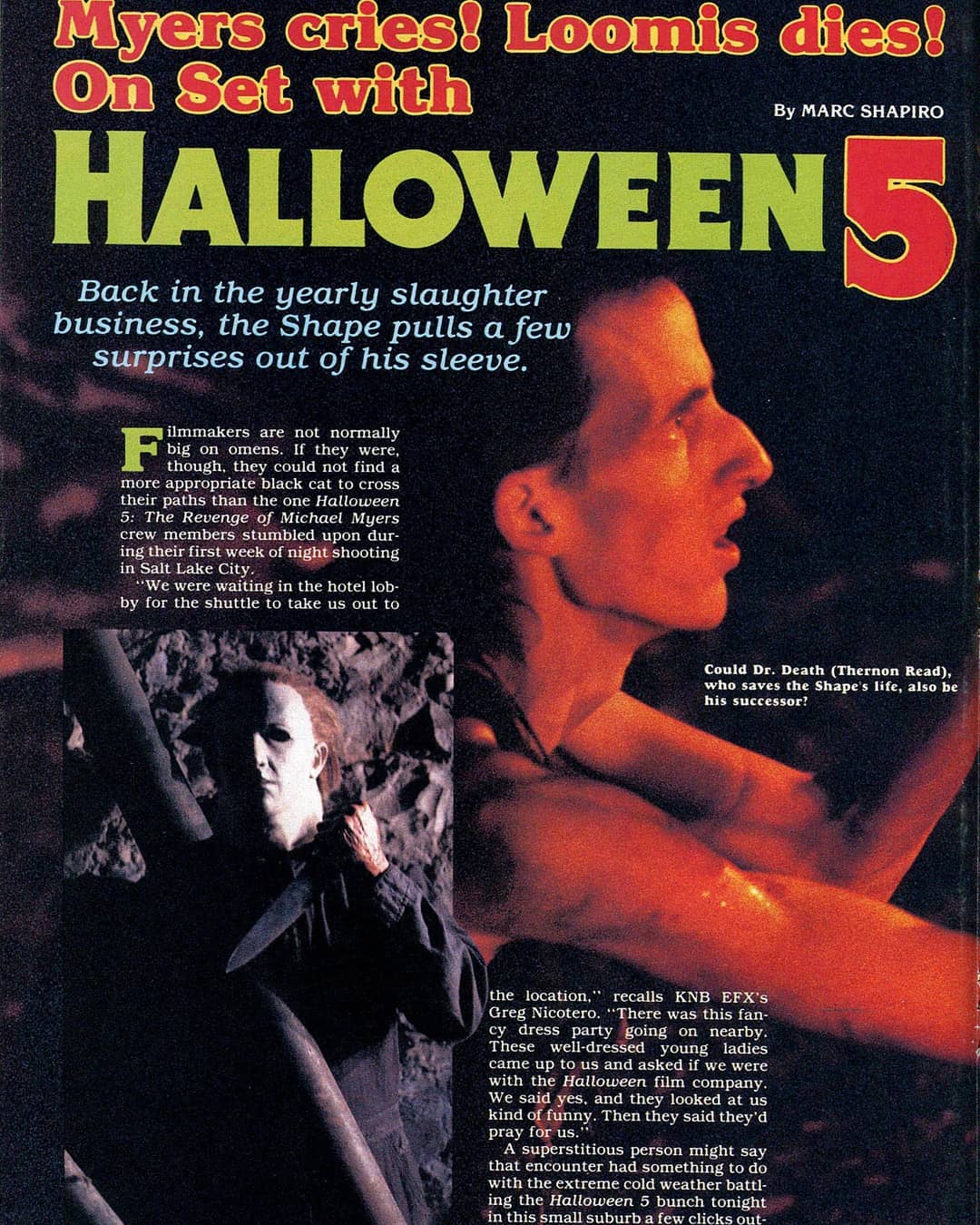
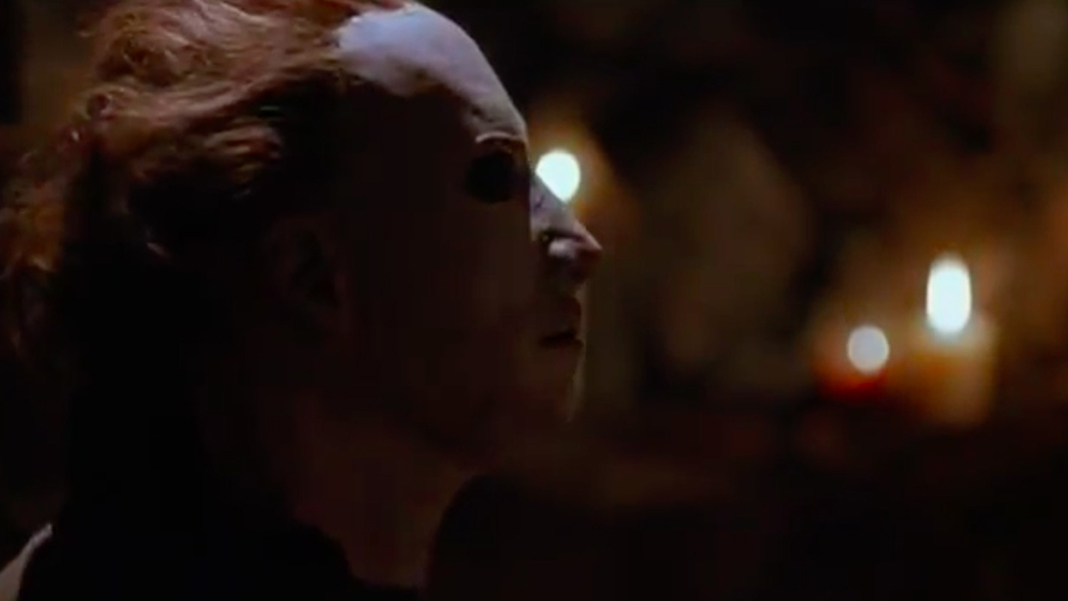
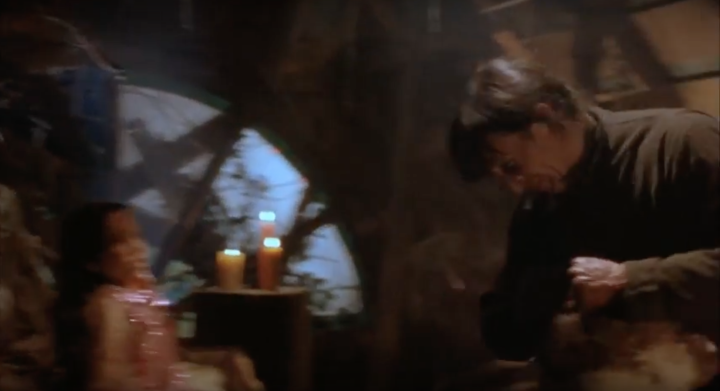
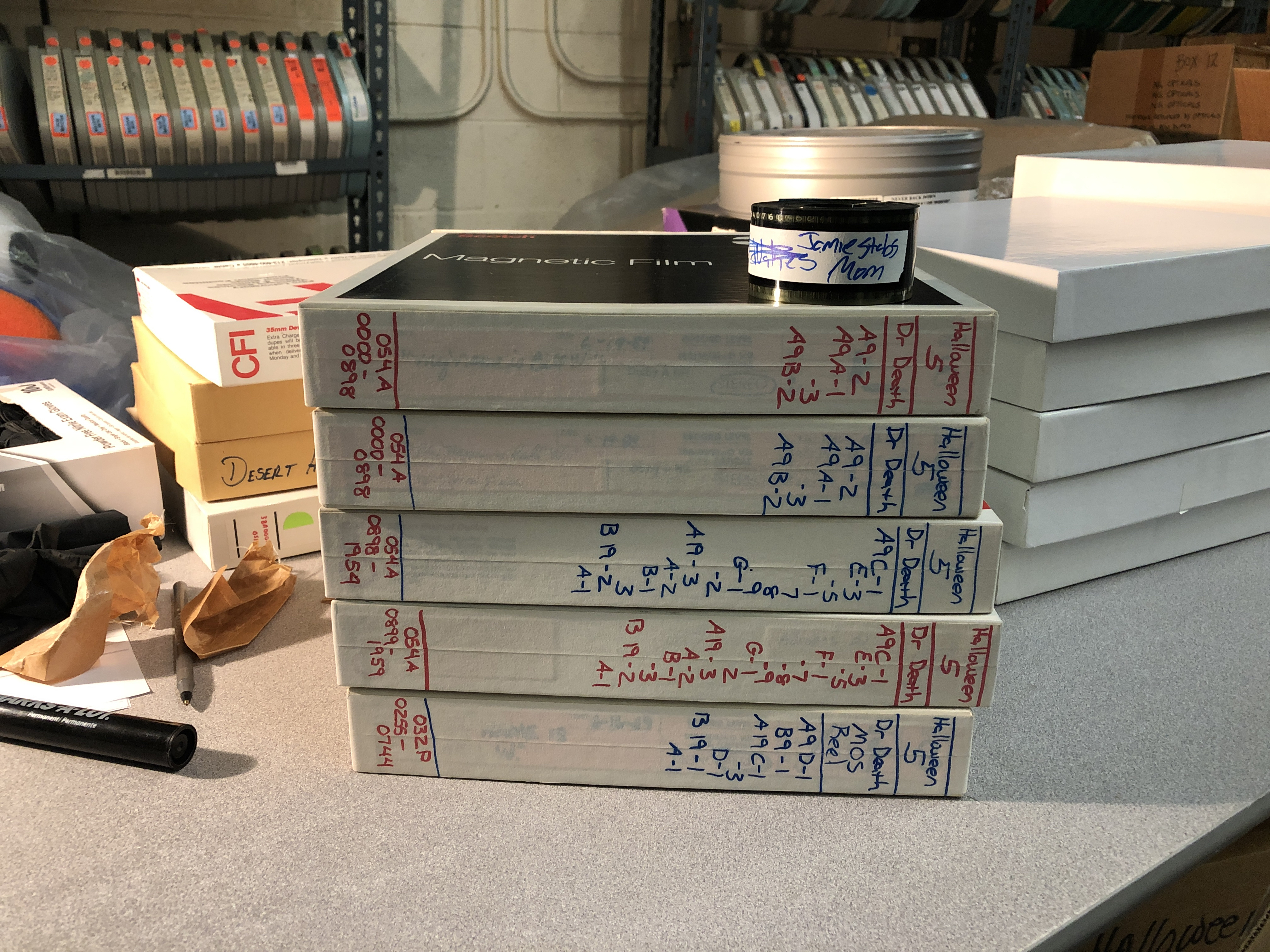
As originally scripted and shot, Myers, in true First Blood fashion, escapes via a fiery opening in the side of a mountain, and riddled with bullets floats down the river to the cabin of Dr. Death, portrayed by local Salt Lake City resident Theron “Uncle Thud” Read, in what has become one of the more discussed ‘lost’ scenes of the film franchise.

Writer’s note: It may not be lost.

“He was a punk comedian here in town,” recalled Shanks of the actor, comic and fixture on the 1980’s SLC punk scene, who is most remembered for his role of Mark Bojeekus in the 1987 comedy Three O’Clock High, and who passed away on July 20th, 2009. “He had a Mohawk haircut, and was very, very emaciated looking.”

Of the scene, which finds The Shape being discovered by Dr. Death and subsequently brought into the cabin in which a resurrection ritual is conducted, Shanks recalled, “(I was) placed on this stone alter, and all around (the set) were things that the production had gotten from witches, and people that sell you the occult. And there were scrolls and different chants and this and that. And (suspended from) the altar, right above me, was this rock that looked like a stalactite – it was on a string and it would circle. And Dr. Death was doing an incantation on me, and then he tattoos on me the Thorn rune, which is the sign of eternal life. And so he does all these incantations, and on Halloween Eve (one year later) I come back to life.”

“So I put the mask on,” continued Shanks of the results of Myers’ not-quite-grateful response to his resurrection, “and I grab Dr. Death by the throat and pick him up over my head and break his back, and then put him on the altar, and take the stalactite and I go through his chest with it. I thought it was one of my better kills. But (later) Moustapha thought it was too much of the occult type thing. So they decided to shoot it differently.”

Gone was Dr. Death, now replaced by actor Harper Roisman who would in the theatrical release portray an elderly mountain man living in the same cabin (in a direct homage to 1935’s Bride of Frankenstein), as were any signs of the occult, with a talking parrot taking their place.

Of Reads’ performance as Dr. Death, “It was eccentric,” offered Shanks, “and if you saw it you would just go, ‘Wow, that guy looks really weird.’ But it kind of gave the film a little more of an artistic and avant-garde (touch). I mean, it worked perfectly. For what we were doing and the way the (occult) set looked, you want something that isn’t the norm. And the old guy, when we re-shot the opening, Othenin-Girard wasn’t even there. We shot that the last day (of production). I think it was (line producer) Rick Nathanson that directed it. Or it might have been (first AD) Kelly Schroeder. But I’m pretty sure Dominique was not there.”

Fangoria Magazine. November 1989. Issue #88.

 Other interesting changes to Myers included those that were visual, as evidenced by The Shape’s mask itself. As designed and provided by Robert Kurtzman, Greg Nicotero and Howard Berger of K.N.B EFX Group (who also served as the film’s special makeup supervisors), Myers’ visage took on an arguably more malevolent look than the ones which had preceded it.

“There were some changes to it after I’d been cast,” said Shanks of the mask. “I believe it had been sculpted off of a mold of Nicotero, and my head’s a little bigger than his. And then Moustapha thought that the nose needed work, so they changed that. And then we put makeup sponges underneath the neck so it would flare out more, because it form-fitted (without them), and it looked more like a face than it did a mask.”

 “And then of course we had to change it again later after Donald Pleasence had broken my nose.”

 In our upcoming Part 3, Shanks talks working with Danielle Harris and Pleasence (and his hearty swing) in Halloween 5: The Revenge of Michael Myers, those infamous ‘lost’ SWAT massacre scenes, a near fatal Camaro mishap, his introduction to the Halloween fan base, and much, much more.


Filed Under: FEATURED, FILM, HALLOWEEN 5 (1989) Tagged With: Black Christmas, Bob Clark, Danielle Harris, Deadly Night, Dominique Othenin-Girard, Don Shanks, Donald Pleasence, Dr. Death, Friday the 13th Part 2, Greg Nicotero, Halloween, HALLOWEEN 4, Halloween 5, Howard Berger, John Carpenter, lost footage, Michael Myers, Robert Kurtzman, Silent Night, Slasher films, The Burning

Primary Sidebar

FOLLOW US ONLINE

  • Facebook
  • Instagram
  • Twitter
  • YouTube

Feature Articles

Halloween Ends to Debut in Theaters and On Peacock October 14, New Poster & More!

With the recent news that Halloween Ends will premiere both in theaters and on Peacock October 14, … [Read More...] about Halloween Ends to Debut in Theaters and On Peacock October 14, New Poster & More!

The First Official Trailer for Halloween Ends is Here!

You wanted it... you got it! From director David Gordon Green, Trancas International Films, Miramax … [Read More...] about The First Official Trailer for Halloween Ends is Here!

New Featurette Halloween Kills “Warriors” Showcases the Strodes

Just ahead of the October 15, 2021 release of Halloween Kills, Universal has released a new … [Read More...] about New Featurette Halloween Kills “Warriors” Showcases the Strodes

MORE FEATURED ARTICLES

Footer

  • Facebook
  • Instagram
  • Twitter
  • YouTube
Privacy Policy | Terms of Use | Legal Notices

Copyright © 2026 · Compass International Pictures · All Rights Reserved. · Log in

HalloweenMovies.com could care less about cookies, but because this is a [WORDPRESS] site, they are present solely to provide you with the best experience on the website, which if you continue to use this website you acknowledge you are agreeable to this. Please also know that HalloweenMovies.com will NEVER sell or utilize your data in any way.    Ok    Privacy Policy