• Skip to primary navigation
  • Skip to main content
  • Skip to primary sidebar
  • Skip to footer

HalloweenMovies™ | The Official Halloween Website

  • NEWS
  • FEATURE ARTICLES
  • FILM SERIES
  • MERCH
  • EVENTS
  • IN THEATERS

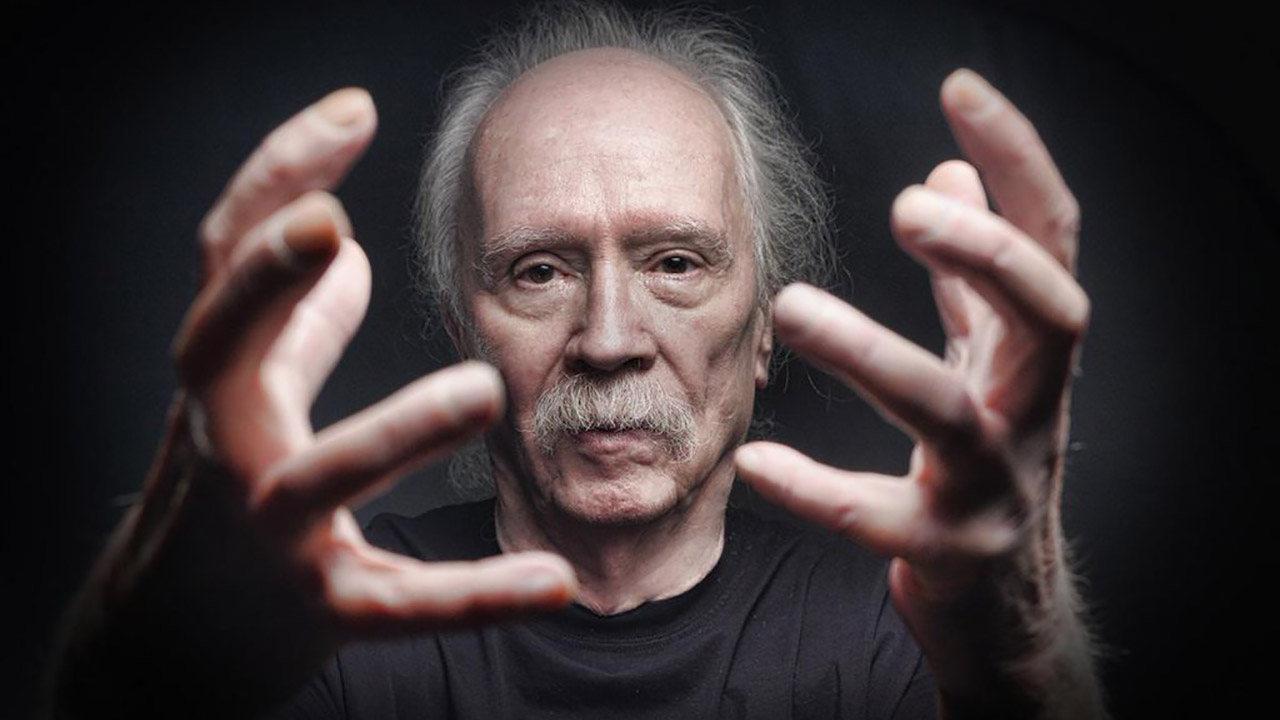
John Carpenter

Writer Dennis Etchison Passes Away at Age 76

May 30, 2019 by Sean Decker

It’s with a heavy heart that we report the passing of writer Dennis Etchison.

A major contributor and editor of horror fiction, Etchison’s work is most known to Halloween fans via his novelizations of several genre films, the first being John Carpenter’s classic The Fog, under the pseudonym “Jack Martin,” with novelizations of both Halloween II and Halloween III to follow (under the same nom de plume).

Born March 30th, 1943 in Stockton, CA, Dennis William Etchison showed an early interest in writing literary fiction. As a teenager his first published story, “Odd Boy Out,” appeared in the gentlemen’s magazine Escapade, and emboldened he continued, attending UCLA film school in the 1960s (where he would later teach classes on creative writing) before becoming a full-time writer in the 1970s.

Etchison’s work went on to include the original novels Darkside (1986), Shadowman (1993), California Gothic (1995) and Double Edge (1996), as well as several well-regarded horror anthologies, including Cutting Edge (1986), a trio of volumes of the Masters of Darkness books, and the award-winning tomes MetaHorror in 1992 and The Museum of Horrors in 2001, among many others. Elected president of the Horror Writer’s Association from 1992-94 and the recipient of the Bram Stoker Award for Lifetime Achievement in 2017, Etchison was proclaimed by author Stephen King as, “one hell of a fiction writer,” as well as, “the finest writer of psychological horror this genre has ever produced,” by Karl Edward Wagner.

In addition to his considerable talent for literary fiction, Etchison’s elephantine knowledge of film was also brought to light in King’s non-fiction 1981 book on the horror genre Danse Macabre, on which Etchison served as a historian and consultant. Other efforts within television and film included a gig as a staff writer on the HBO series The Hitchhiker (1983-87), as well as having co-written with John Carpenter an unproduced script for Halloween 4: The Return of Michael Myers in 1986.

Our sincere condolences to his wife Kristina and surviving family.

__

Dennis Etchison (May 30th, 1943 – May 28th, 2019)

 

Filed Under: HALLOWEEN (1978), HALLOWEEN II (1981), HALLOWEEN III (1982), JOHN CARPENTER'S HALLOWEEN, NEWS Tagged With: Bram Stoker Award, Dennis Etchison, Halloween, John Carpenter, obituary, Stephen King, The Fog

‘DEEP CUT’ TRIVIA: ‘What’s the name of Laurie Strode’s Ex-Husband?’

May 23, 2019 by HalloweenMovies

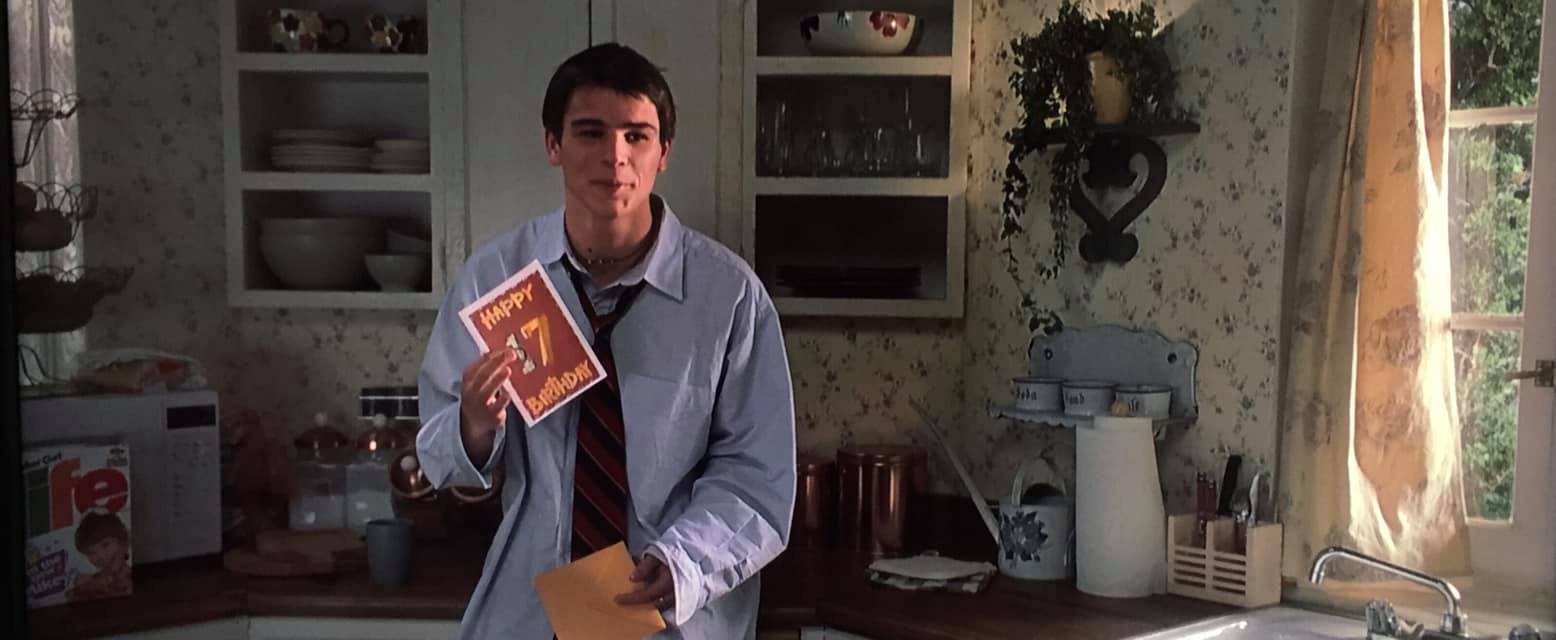
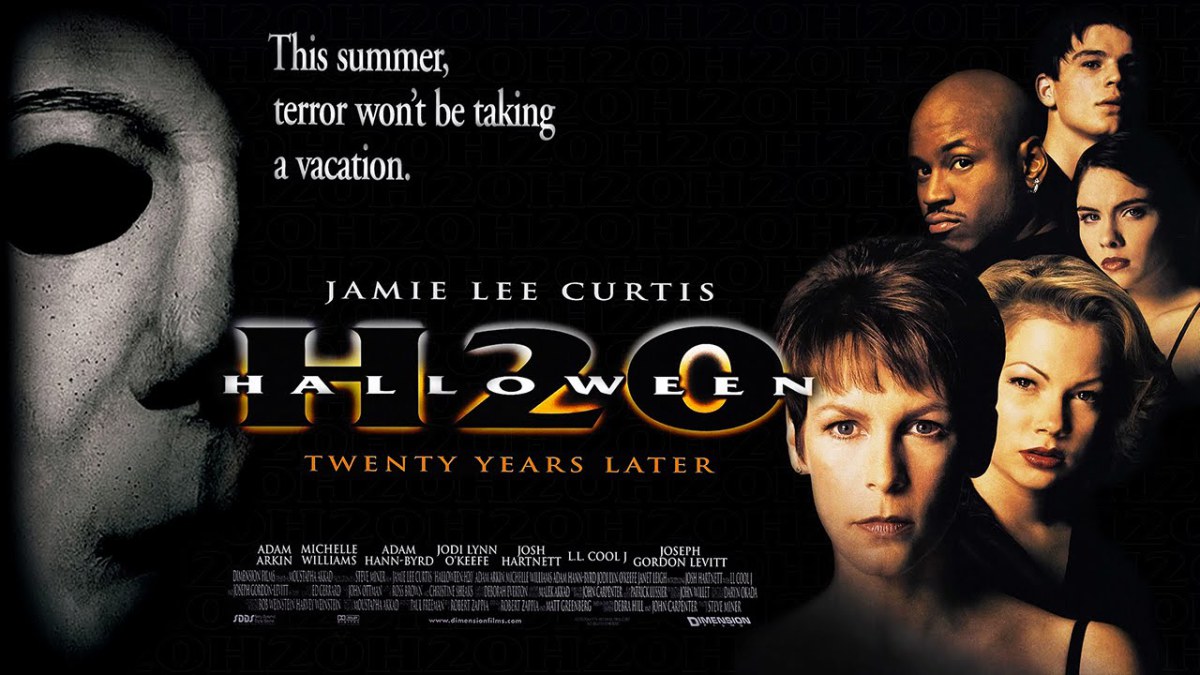
Following the events of Halloween and Halloween II, director Steve Miner’s 1998 film Halloween H20: Twenty Years Later finds those films’ heroine Laurie Strode (Jamie Lee Curtis) with a different name, living under the assumed identity of ‘Keri Tate,’ the “head mistress of a very posh, secluded private school in Northern California,” with her seventeen year-old son John (actor Josh Hartnett).

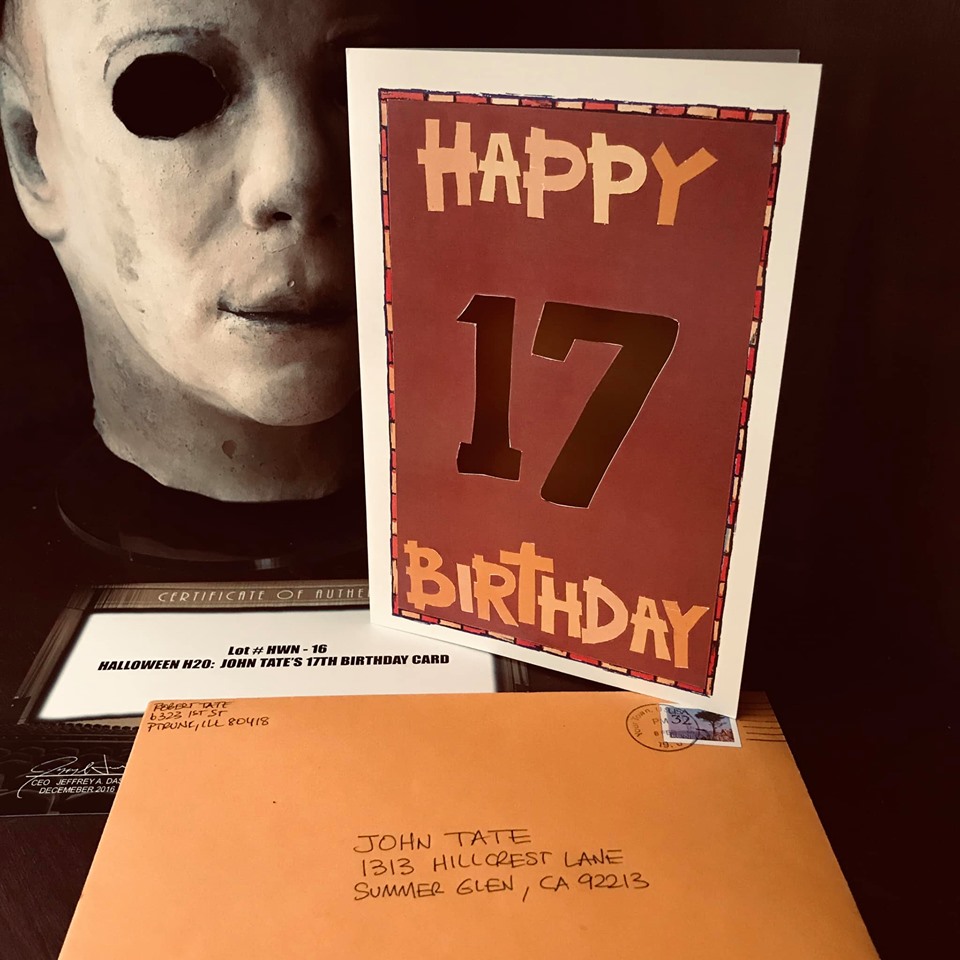
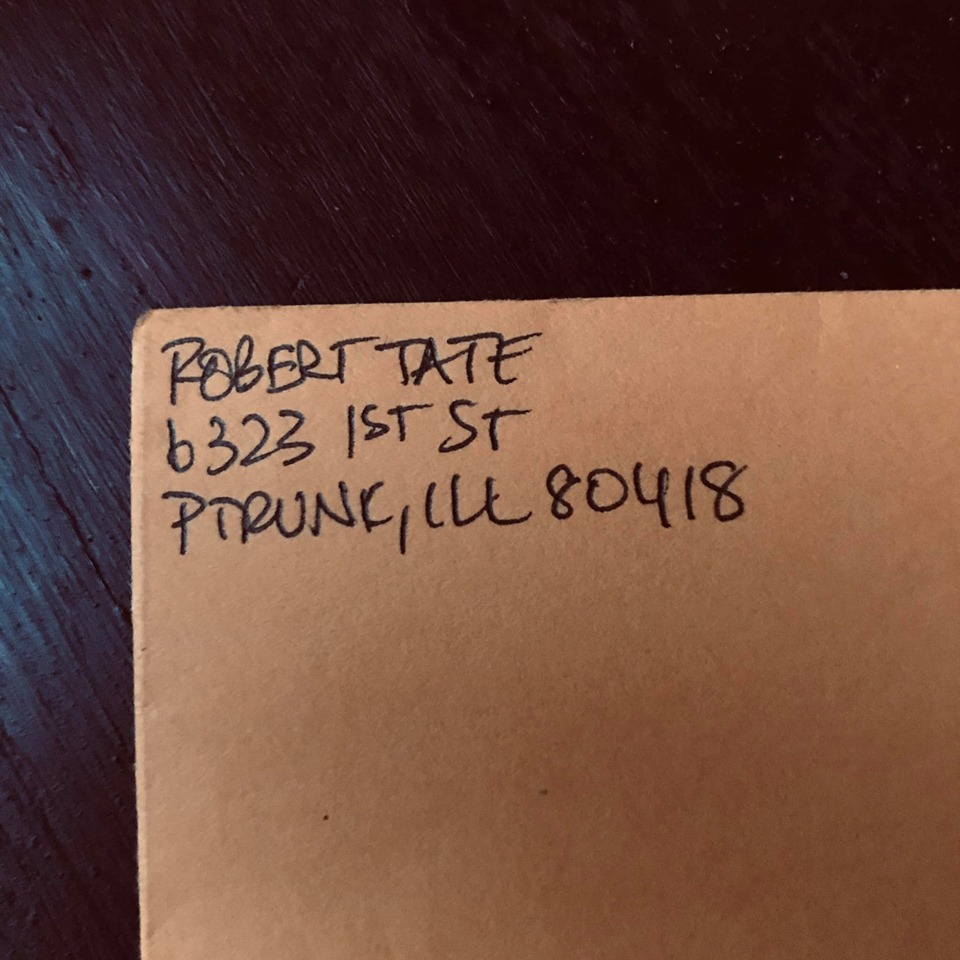
But who’s John’s father? We’ve done some digging, and according to the screen-used birthday card and envelope as opened by Hartnett in the film (recently acquired by a private collector – photos below), the character’s dead-beat dad and Laurie’s “abusive, chain smoking, methadone addict ex-husband” is one ‘Robert Tate,’ who resides at 6323 1st Street in Ptrunk, Illinois.

According to Google, Ptrunk, Illinois doesn’t exist, and neither does Summer Glen, California, but ah, movie magic, and you’ve gotta’ appreciate that art department’s dedication to minutia!

Check out the scene below.

Filed Under: FEATURED, HALLOWEEN H20 (1998) Tagged With: Halloween, Halloween H20, Jamie Lee Curtis, John Carpenter, John Tate, Josh Hartnett, Laurie Strode, Michael Myers, Miramax, Steve Miner, Trancas International Films

John Carpenter Teases Return to Directing Horror?

May 16, 2019 by Sean Decker

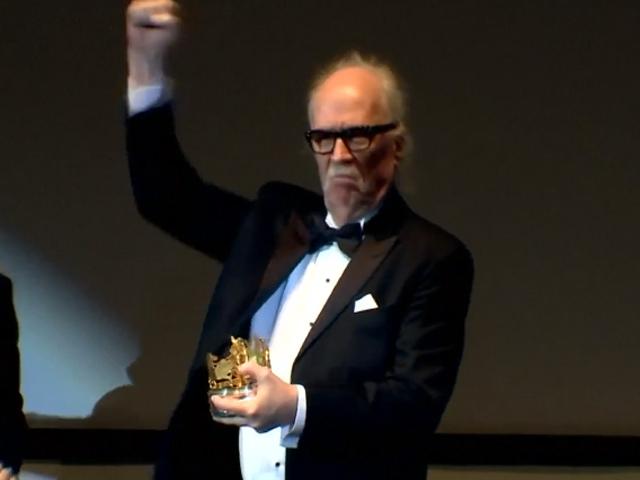
In speaking to the press this week at the Cannes Film Festival (where he received the Golden Coach award), writer, composer, director and master of horror John Carpenter teased his interest in a possible return to the director’s chair, as well as to the horror genre itself.

While speaking with The Hollywood Reporter, the filmmaker, whose impressive body of work includes the genre classics Halloween (1978), The Fog (1980), Escape from New York (1981) and The Thing (1982) among others, stated, “I’m working on some TV stuff and a couple of feature ideas. It’s a different time now, so it takes a long time for them to get set up. You’ll know it when you know it. I don’t know it (yet).”

Expounding to Collider, Carpenter (whose last directorial feature was 2010’s The Ward) observed, “I made a lot of movies and I got burned out, and I had to stop for a while. I have to have a life. Circumstance would have to be correct for me to do it again. I’d love to make a little horror film that would be great or a big adventure film. It would be a project that I like that’s budgeted correctly. Nowadays they make these young directors do a movie for $2 million when the movie is written for $10 million. So you have to squeeze it all in there and I don’t want to do that anymore.”

What kind of flick would you care to see Carpenter helm? Sound off in the comments below.

Filed Under: FEATURED, FILM, HALLOWEEN (1978) Tagged With: cannes, Escape from New York, Halloween, John Carpenter, Michael Myers, The Fog, The Hollywood Reporter, The Thing, The Ward

Did Halloween H20’s Shooting Script Acknowledge The Cult of Thorn? Patrick Lussier Speaks

May 15, 2019 by Sean Decker

Over the course of eleven films the Halloween franchise has taken several varied narrative paths, and director Steve Miner’s 1998 film Halloween H20: Twenty Years Later is no exception.

Intended as the finale to the story arc of character Laurie Strode (the series’ ‘Final Girl’ originated by actress Jamie Lee Curtis in John Carpenter’s 1978 classic Halloween, who reprised her role three years later in Rick Rosenthal’s direct sequel Halloween II), Miner’s film intentionally ignored everything which followed the two, including the narrative thread established in the sequels Halloween 4, 5 & 6. Those three films, without the inclusion of Curtis, saw series’ slasher Michael Myers set his sights on a new target, one Jamie Lloyd, a character who was introduced as the orphaned daughter of Strode, the latter having perished in an automobile accident.

But what if H20 hadn’t ignored this thread?

IMDB legend has it that the shooting script of H20, as written by Robert Zappia and Matt Greenberg (from a loose treatment by Kevin Williamson) allegedly bridged the gap with a scene in which a Hillcrest student Sarah (H20 actress Jodi Lyn O’Keefe) delivers a class report on the “Haddonfield Murders,” which ties the series’ disjointed narrative threads together (you can read the script pages below), and in effect renders the Lloyd narrative canon.

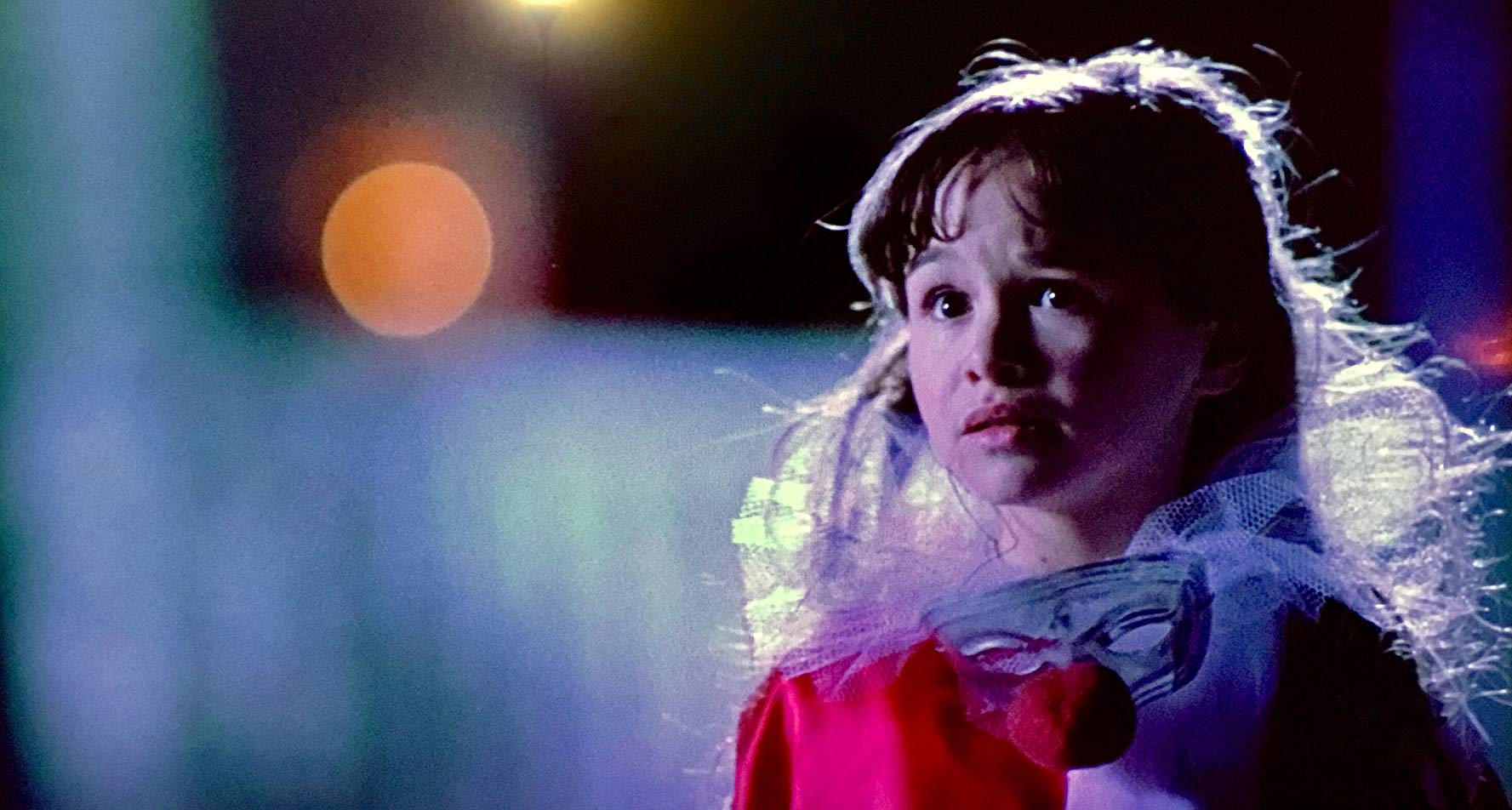
Above: Actress Danielle Harris as ‘Jamie Lloyd’ in Halloween 4: The Return of Michael Myers

So, was the scene shot? We reached out to Halloween H20: Twenty Years Later editor Patrick Lussier last week for clarification, and you can read his response below.

But first, the scene in question.

INT. CLASSROOM – LATER THAT DAY

Students file into the class, sit in their assigned seats. KERI stands behind a desk at the head of the class. The Bell Rings.

KERI

Good morning, class.  Mr. Elliot’s out sick this week…turns out it was his appendix.

The students ad-lib “COOL,” “ALRIGHT,” “YEAH.”

KERI(cont’d)

Your compassion is overwhelming.  But I’m sure you’ll be happy to hear that he gave me the list of students who will be giving their oral reports today.

The students groan.

KERI (cont’d)

I thought so.  First up is Sarah Locke.

Sarah crosses to the podium at the head of the class, stands behind it. She reads off a stack of index cards in front of her…

SARAH (rapidly)

“The Haddonfield Murders” by Pamela Whittington.  A totally gruesome depiction of serial killer Michael Meyers’ path of destruction in a small Illinois town.

Keri sits up in her chair, uneasy.  Of all the books…

During the following, we INTERCUT between the described flashbacks and Keri, as she struggles to maintain her composure as the memories come flooding back —

SARAH (cont’d)

The riveting tale begins with young Meyers repeatedly stabbing his older sister to death on Halloween night in 1963.

BEGIN FLASHBACK.

During the previous dialogue we see the correlating scene from “Halloween” where young Michael Meyers in clown attire murders his sister.

SARAH (OS) (cont’d)

Years later Meyers escaped from Dr. Loomis’ care at Smith’s Grove Institution and returned home to Haddonfield.

During the previous dialogue we once again see the correlating scene from “Halloween” where Michael escapes from outside the gates of Smith’s Grove in Dr. Loomis’ station wagon.

SARAH (OS) (cont’d)

It was there that he stalked Laurie Strode…Meyers’ younger sister…

We see the correlating scene from “Halloween” where the Shape watches Laurie Strode through the screen door as she approaches the old Meyers’ house.

SARAH (OS) (cont’d)

What followed was a night of terror as Michael Meyers slaughtered one innocent victim after another. Strangled some… stabbed others… in the end it was a Halloween of unprecedented carnage.

We see a MONTAGE of murders from “Halloween” and “Halloween II.”

END OF FLASHBACK.

ON Keri, eyes swelling, struggling to keep the lid on her emotions…

SARAH (cont’d)

Ironically, Laurie survived that night, but was said to have died in a car accident years later… leaving behind her only daughter, Jamie.

BEGIN FLASHBACK.

During the previous dialogue, we see footage of young Jamie from “Halloween IV.”

SARAH (cont’d)

The book maintains there is truth to the rumor that Laurie Strode is actually alive and well and living under a new identity.  Claiming that she gave up her daughter for adoption to protect the eight-year- old from her psychotic Uncle. Bad idea.  Last Halloween, Jamie’s mutilated body was found in a barn just outside of Haddonfield.

We see Jamie’s demise as depicted in “Halloween VI.”

END FLASHBACK.

ON Keri, unable to stand it any longer.  She grabs her bag, heads for the door.

KERI

Excuse me…

Keri darts out of the classroom.

The students sit in stunned silence, baffled.  Sarah collects her cards and heads back to her seat…

SARAH (cont’d)

That was like so rude.

INT. GIRLS’ RESTROOM – MINUTES LATER

Keri bursts through the bathroom door…locks herself inside an empty stall…drops to her knees, barely making it over the toilet before tossing up her breakfast.

When queried, Lussier said of the pages to HalloweenMovies.com, “That’s an interesting scene, but never one that I read or encountered in the footage.  As far as I know, there was never a scene like (above) that (was) shot. There was a big rewrite shortly before production where several things changed, including the (removal of the) whole character Charles S. Dutton had been hired to play (which included a death scene in the middle of the film) although the (scripted) scene as described was never shot, or if it was, it never came through editorial (which would be highly unlikely).”

Lussier concluded, “So, there was never any cult reference in H20 shot, or in the scripts that I read for the film.”

So there you have it?

Filed Under: FEATURED, HALLOWEEN H20 (1998) Tagged With: Halloween, Halloween H20, Halloween II, Jamie Lee Curtis, Jodi Lyn O'Keefe, John Carpenter, Laurie Strode, Michael Myers, Patrick Lussier, Rick Rosenthal, Steve Miner

‘REWIND’ to ’81: Halloween II For Fright Fans

May 2, 2019 by Sean Decker


A fire lit in 1960 by Alfred Hitchcock’s Psycho and Michael Powell’s Peeping Tom, the flames of the slasher film subgenre were fanned in 1974 by Bob Clark’s Black Christmas, and then most assuredly whipped into a firestorm in 1978 by John Carpenter’s seminal and immensely profitable Halloween. And if imitation is the sincerest form of flattery, director Carpenter and his leading lady Jamie Lee Curtis may have indeed been gratified to witness the deluge of films released upon its heels which hoped to achieve similar success.

1979’s When a Stranger Calls, Tourist Trap, Driller Killer and the unrelated ‘confusion’ marketed The Day After Halloween (among others) were the first to take a stab at the box office, all with middling success, while 1980 saw the release of the first (and well received) Friday the 13th film, as well as a few dozen others, including Maniac, Christmas Evil, Terror Train and Prom Night, the latter two featuring Curtis herself. But it wasn’t until 1981 when the actress, who by that time had been crowned the ‘Scream Queen’ of the genre, would return to the role of Laurie Strode which she’d originated in Carpenter’s classic.

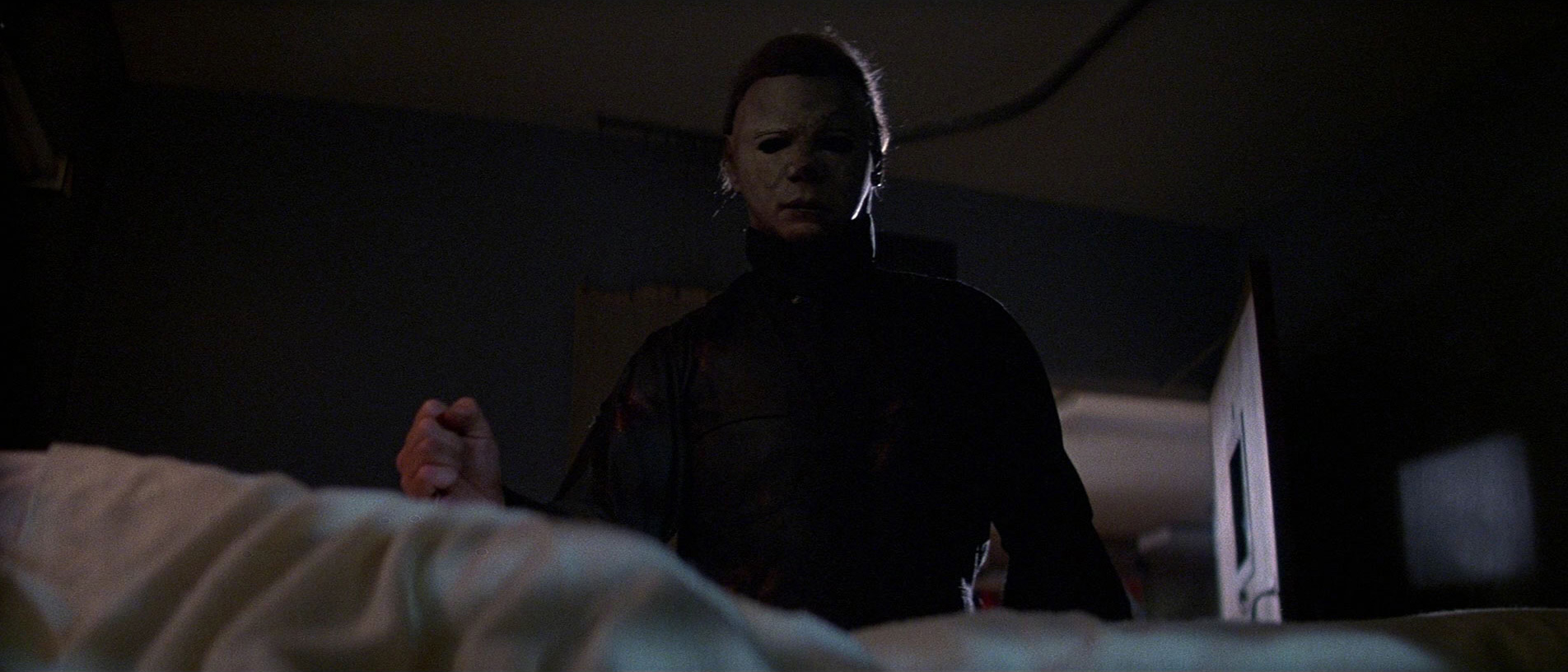
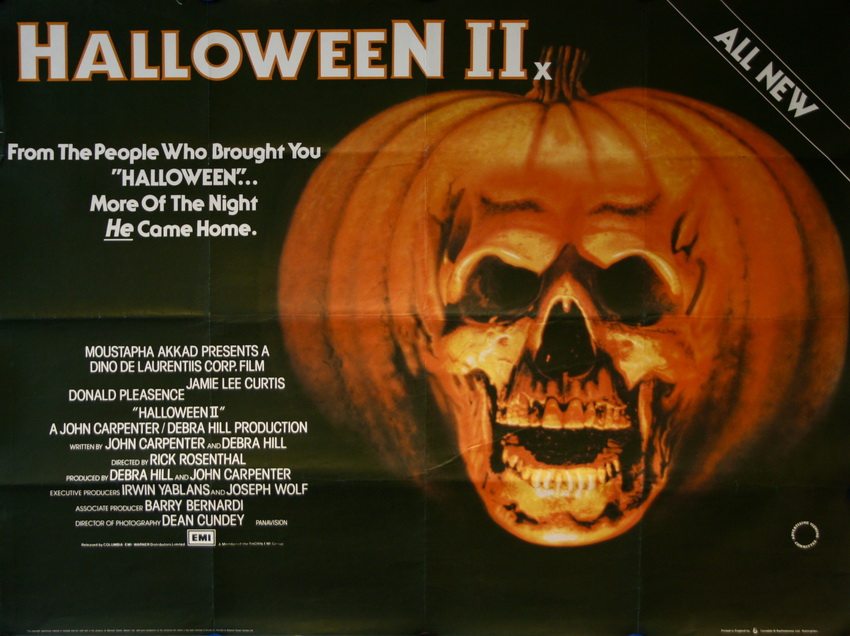
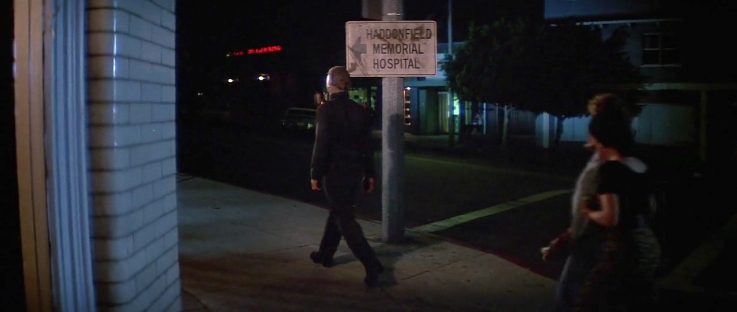
Released on October 30th, 1981, director Rick Rosenthal’s Halloween II picked up from where its predecessor left off, and documented more of ‘The Night He Came Home,’ as the film’s antagonist Michael Myers continued to stalk heroine Strode from the streets of Haddonfield into the town’s hospital, and audiences reacted with wild enthusiasm. The flick’s domestic box office take was $25.5 million from a $2.5 million budget.

And while film critics Gene Siskell and Roger Ebert may have heralded the original Halloween as a film of “artistry and craftsmanship,” while later vilifying the slasher genre as a whole with a seemingly incessant smear campaign, calling them “Movies that hate women” (see a portion of the pair’s September 1980 episode of their weekly PBS show Sneak Previews for more below), other critics’ responses to Rosenthal’s follow-up were overwhelmingly positive.

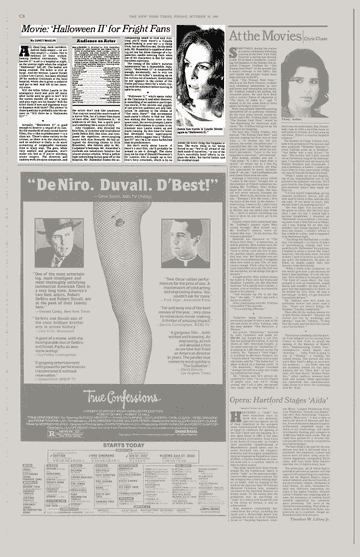
In fact, The New York Times film reviewer Janet Maslin called Halloween II a, “Class act.”

Read on.

—

HALLOWEEN II FOR FRIGHT FANS

ALL those long, dark corridors. And all those empty – or are they empty? – rooms. Not to mention all those wicked-looking medical instruments. Halloween II is set in a hospital at night, on the precise night when the original Halloween left off. The bodies are being counted. The killer is still at large. And the heroine, Laurie Strode (Jamie Lee Curtis), has been whisked off for medical treatment at the local hospital, where she is given a sedative and put to bed. And left in her room. All alone.

Will the killer follow Laurie to the emergency ward and pick off nurse after nurse until he gets to her? Will the nurses wander off one at a time and play right into his hands? Will the killer think of new and ingenious ways to dispense with them? The answer to these questions is probably also the answer to ”Will there be a Halloween III?”

Actually, Halloween II is good enough to deserve a sequel of its own. By the standards of most recent horror films, this – like its predecessor – is a class act. There’s some variety to the crimes, as there is to the characters, and an audience is likely to do more screaming at suspenseful moments than at scary ones. The gore, while very explicit and gruesome, won’t make you feel as if you’re watching major surgery. The direction and camera work are quite competent, and the actors don’t look like amateurs. That may not sound like much to ask of a horror film, but it’s more than many of them offer. And Halloween II, in addition to all this, has a quick pace and something like a sense of style.

John Carpenter, who directed the first film, is co-writer and co-producer (with Debra Hill) this time, and composed the repetitive, nerve-jangling music with Alan Howarth. He has assigned the directing chores to Rick Rosenthal, who follows ably in Mr. Carpenter’s footsteps. Mr. Rosenthal’s methods are sometimes familiar but almost always reliable. When a yellow light summoning nurses goes off at the hospital, Mr. Rosenthal makes the accompanying sound so loud and startling you’ll think there’s a Canada goose honking in your ear – a cheap trick, but an effective one. On the debit side, Mr. Rosenthal is capable of showing not one but three closeups of a hypodermic needle entering flesh when one of his characters is due for some harmless injections.

The timing of the killer’s surprise appearances has a dependable regularity. Halloween II is suspenseful enough, incidentally, not to rely too heavily on the killer’s sneaking up on his victims out of nowhere. Sometimes he just appears in the corner of the frame and stays there for a while, toying with the audience before moving in upon his prey.

Halloween II, which opens today at the Cinerama II and other theaters, is something of an audience participation movie, if the shrieks and giggles of one preview audience are any indication. In addition to the shouts of ”Get outta there!” that accompany each nurse’s efforts to find out what was making that funny noise in that spare room, the movie prompts Laurie Strode’s well-wishers to scream in excitement once Laurie wakes up and starts running. By this time the killer has developed some supernatural powers, which suggest that a Halloween III may be a lot more far fetched than its predecessors.

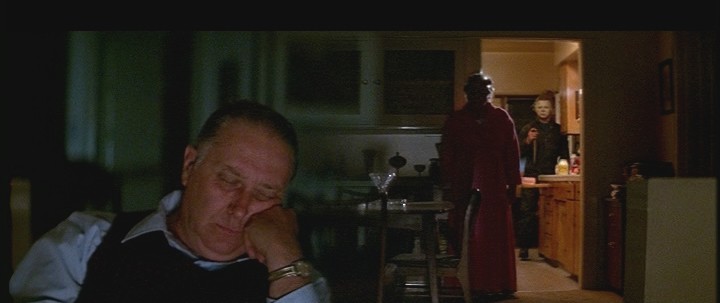
But don’t worry about Laurie: if there’s a next film, she’ll probably be around to see it through. The same may not be true of Donald Pleasence’s Dr. Loomis, who is caught up in this film’s fiery crescendo, which is by no means the worst thing that happens to him. The worst thing is his being forced to say ”We’re all afraid of the dark inside of ourselves,” in one of the film’s mercifully brief efforts to explain the killer, his horrid habits and his troubled mind.

Siskell and Ebert’s Sneak Previews, September 1980

Halloween II Trailer

Filed Under: FEATURED, HALLOWEEN II (1981) Tagged With: Alfred Hitchcock, Black Christmas, Christmas Evil, Driller Killer, Friday the 13th, Halloween, Halloween II, Jamie Lee Curtis, John Carpenter, Maniac, Michael Myers, Peeping Tom, Prom Night, Rick Rosenthal, Siskell and Ebert, slasher, Sneak Previews, Terror Train, The Day After Halloween, The New York Times, Tourist Trap, When a Stranger Calls

Halfway to Our Favorite Holiday – Celebrate with New Officially Licensed Halloween Merchandise

April 30, 2019 by Sean Decker

With 184 days left until our favorite holiday, we’re getting into the spirit here at HalloweenMovies.com, and what better way is there other than to showcase some killer new Officially Licensed Halloween product?

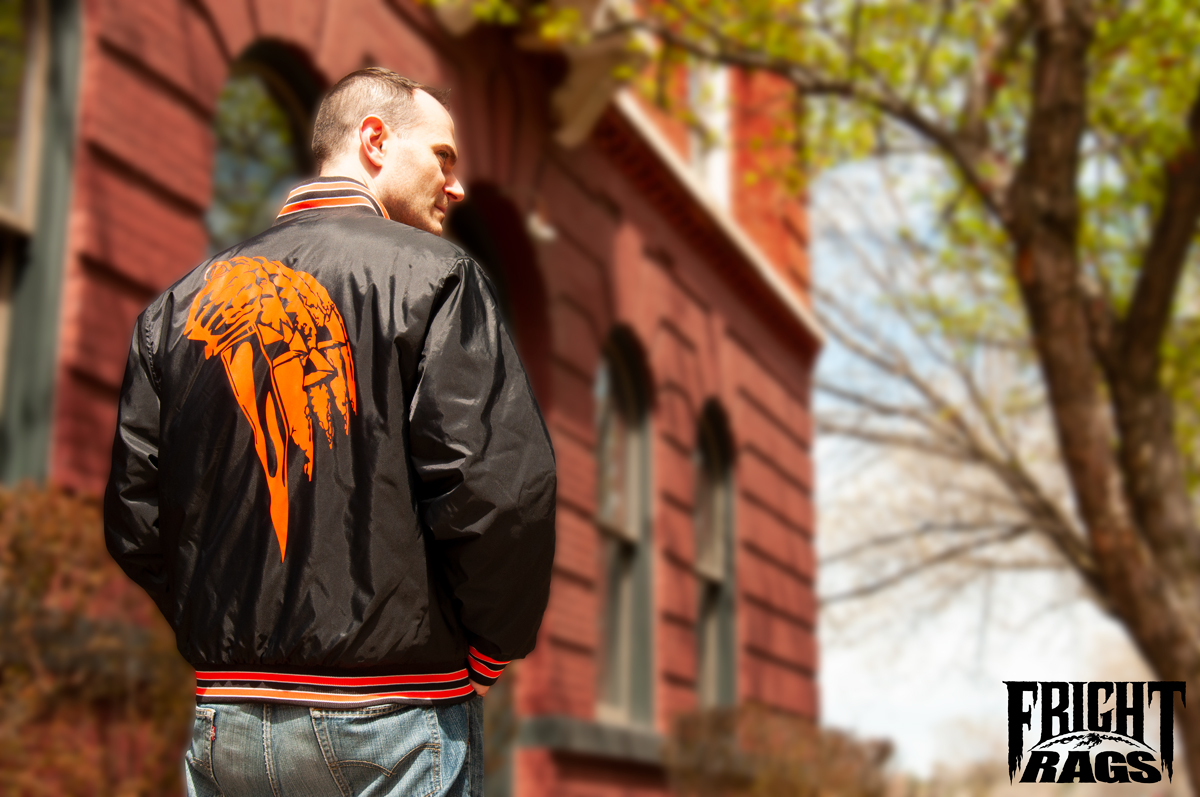
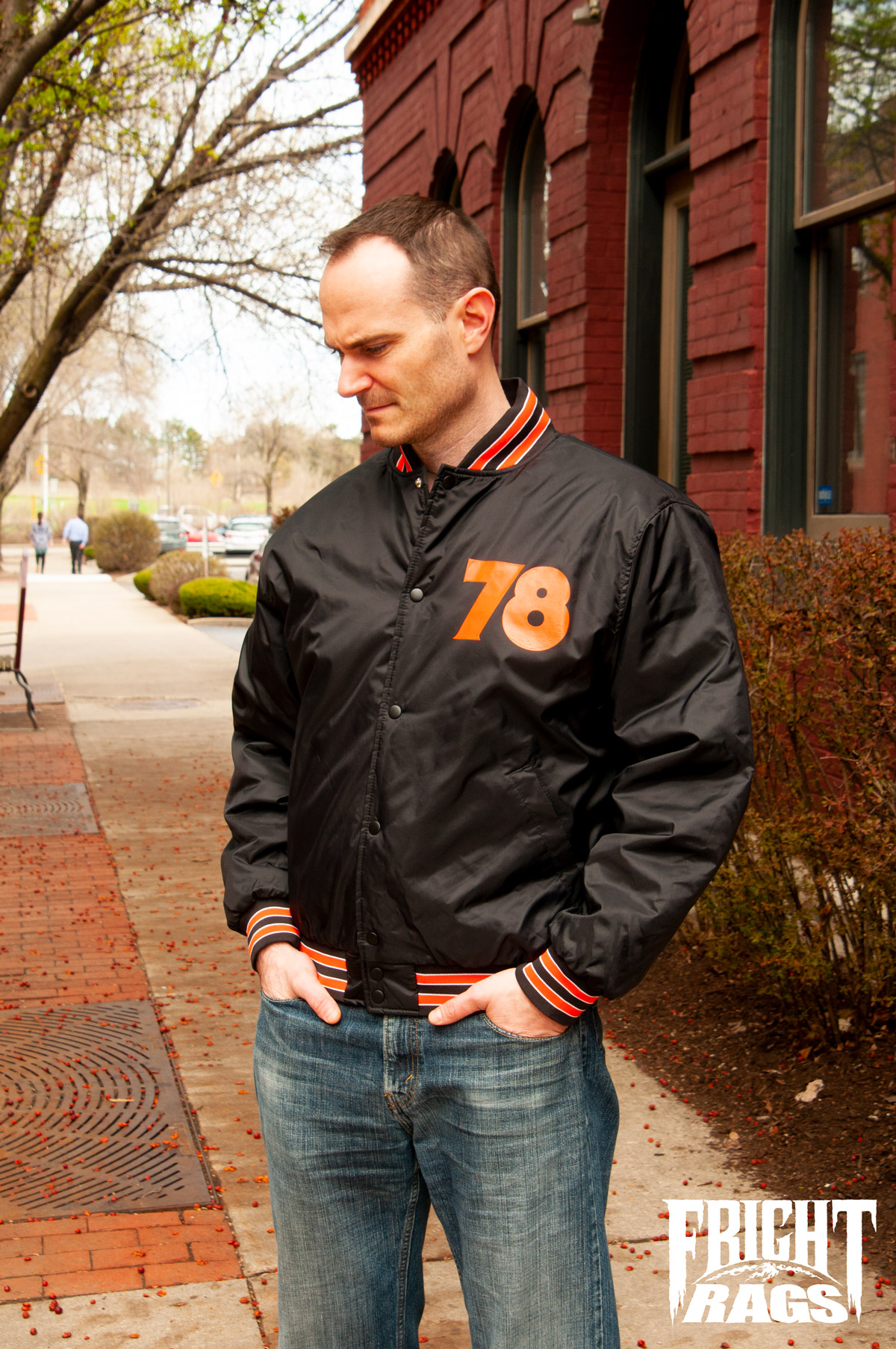
Always on point with great quality and design, our friends over at Fright-Rags are celebrating today with their Officially Licensed Halloween Classic Nylon Jacket. Available in sizes Small to 3XL, this retro inspired, true-to-size button-up jacket has quilted nylon lining, a smooth nylon outer shell and classic striped ribbed trim hems.

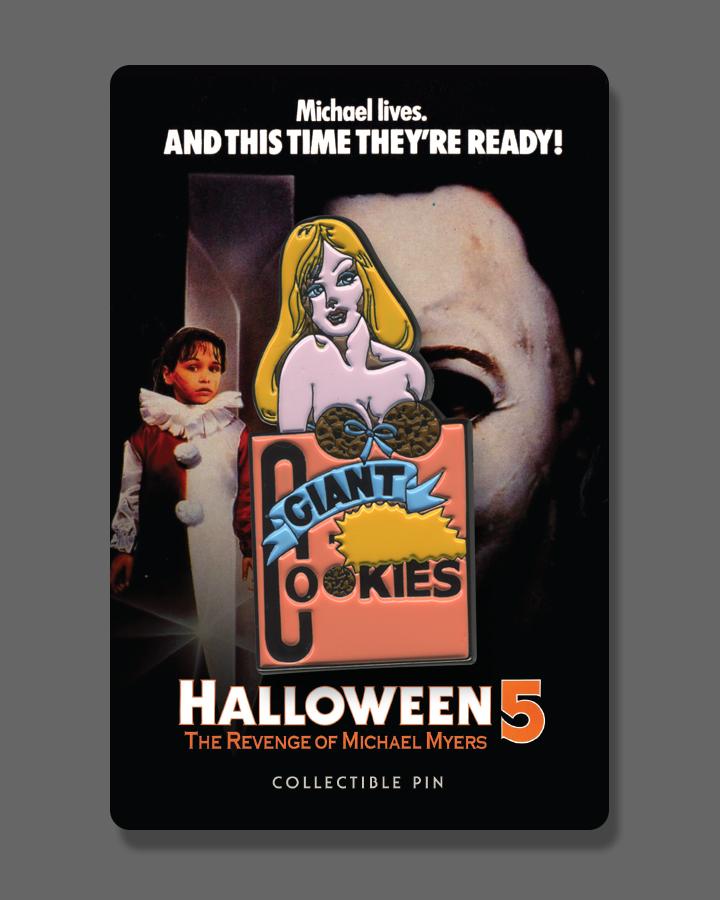
Perfect for cool spring or autumn days and priced at $100, pre-orders began this morning. Click here and get ‘em before they’re gone (the jacket’s only available for pre-order until 5/5 at 11:59pm EST, and ships the week of May 24), and while there also check out their other Officially Licensed Halloween products. With classic and original designs (including those from Justin Osbourne, Shane Murphy & Ralf Krause), Fright-Rags T-shirts, hoodies, socks and enamel pins are more than enough to sate the most die-hard of Halloween fans.

Want proof? We’ll just leave this deep cut of an enamel pin right here.

For more, stay up to date with Fright-Rags on their official Instagram page here.

Filed Under: HALLOWEEN (1978), MERCHANDISE, NEWS Tagged With: Fright Rags, Giant Cookies, Halloween, Halloween 5, John Carpenter, Justin Osborne, Michael Myers, Officially Licensed, Ralf Krause, Shame Murphy

‘REWIND’ to ‘82: Halloween III Masks To Help Scare Up Sales

April 25, 2019 by Sean Decker

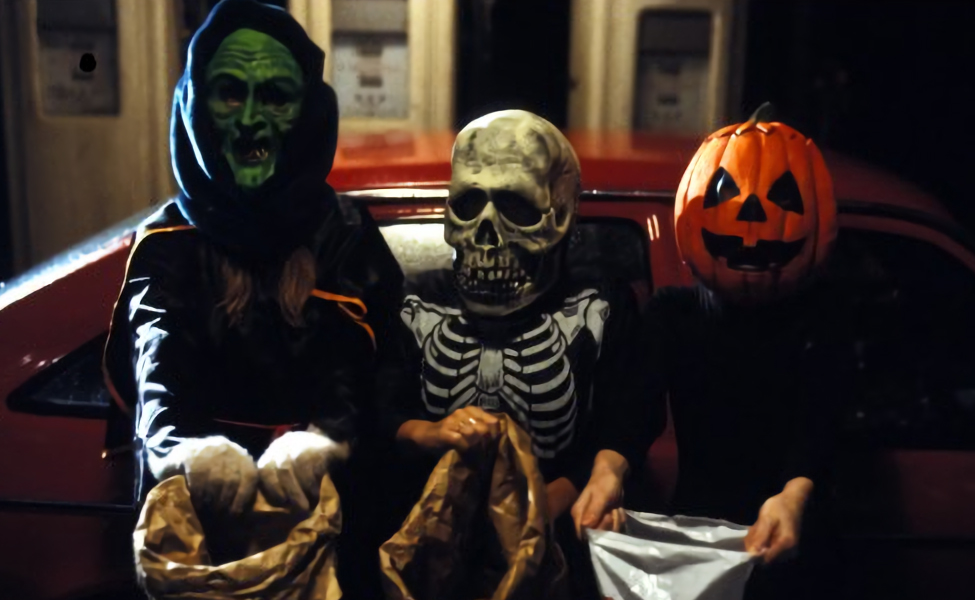
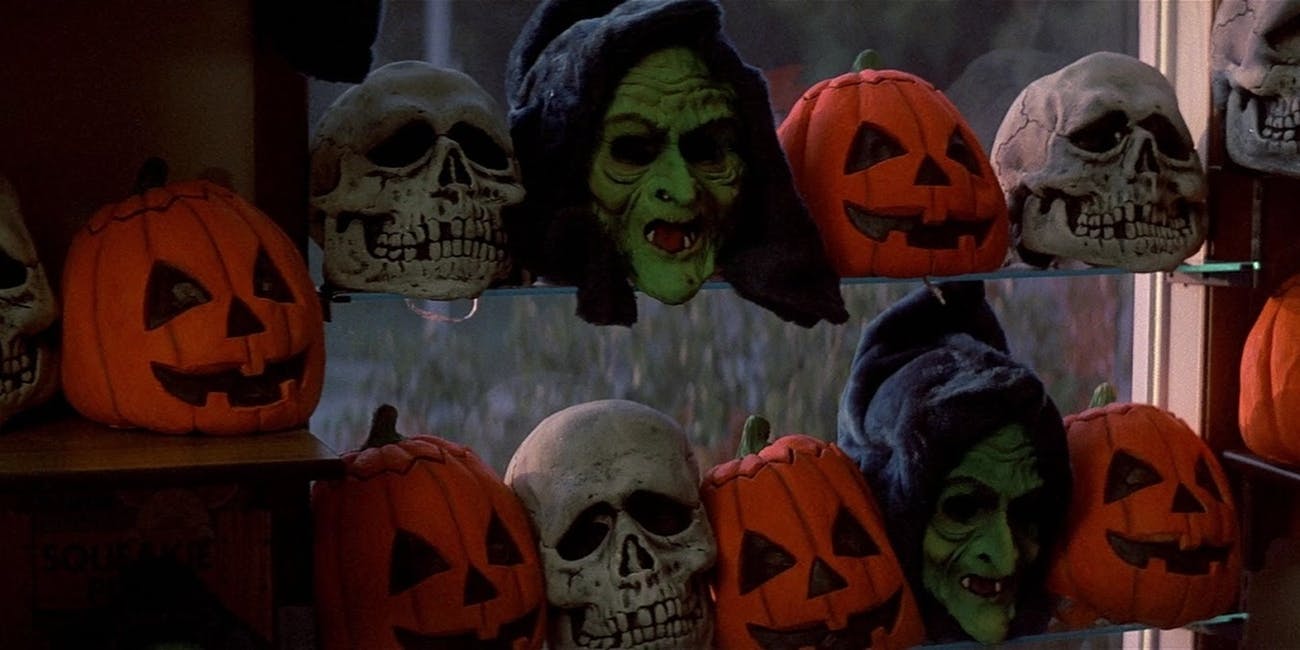
In 1982, genre fans could score themselves a Don Post-created mask from Halloween III: The Season of the Witch for a mere $25.00 (those same vintage masks now go for roughly $500.00 in the collector space, which means we’re thankful for Trick Or Treats Studios’ current and affordable reissues).

In today’s ‘Rewind’ article (a new series in which we’ll take a look back at vintage coverage and moments of and on the Halloween franchise), writer Aljean Harmetz’s October 16, 1982 piece in The New York Times focuses on mask-maker Post, who talks those original mass-produced Halloween III masks, as well as Universal Pictures’ at-times unique marketing approach to the R-rated film (which interestingly enough included inviting children – who’d colored newspaper advertisements of the murderous Silver Shamrock masks – to the studios’ backlot for a mask-making demo), and a whole lot more.

So gather around, kids. The big giveaway is at 9. And don’t forget to wear your masks.

___

HALLOWEEN III MASKS TO SCARE UP SALES

The three Halloween masks that form an integral part of the plot of a new movie, Halloween III: Season of the Witch, will also be an adjunct to the merchandising of the movie, which opens next Friday in 1,250 theaters across the country.

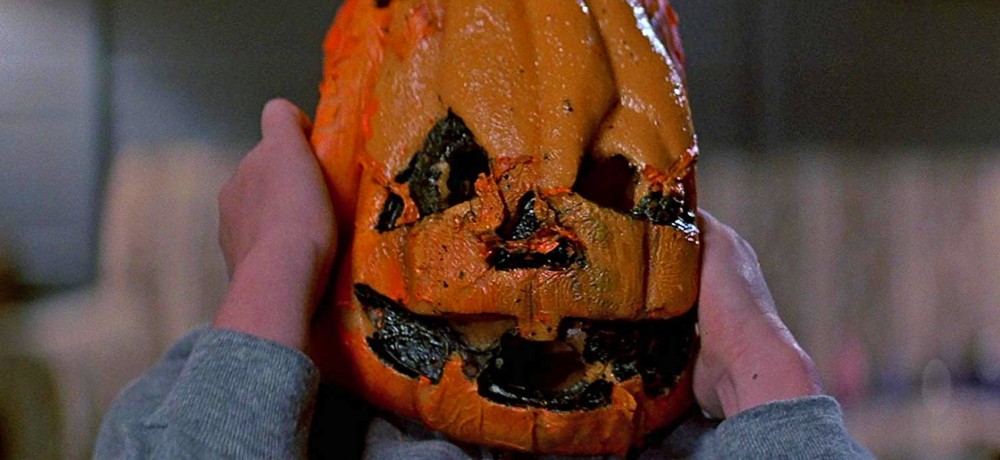
The glow-in-the-dark sunken skull, the menacing orange Day-Glo pumpkin head and the lime-green latex witch mask that a diabolical mask maker in the movie hopes will make millions of children his prisoners will be offered for use in the real world this Halloween.

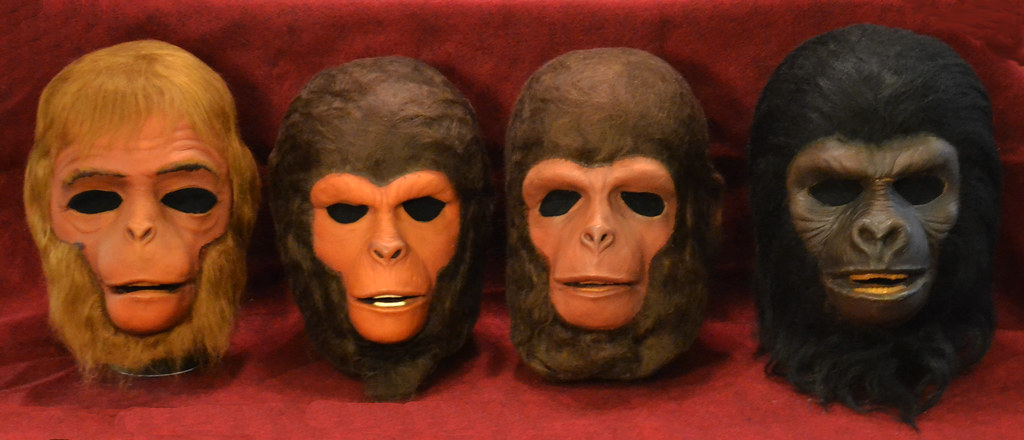
Because the three masks will retail for about $25 each, it is doubtful that many 10-year-old trick-or-treaters will wrap themselves in the witch’s dark blue-gray cowl or don the clammy black vinyl of the skeleton. ”Our masks are for an adult market, 13-to-35-year olds,” said Don Post, whose father was one of the creators of the latex mask industry nearly 45 years ago. Although Don Post Studios was successful with masks of monsters from Universal movies in the 1960’s, Mr. Post dates the dramatic realization that there was money to be made from intertwining masks and movies to 1970, when 20th Century-Fox decided to license masks for a then-three-year-old movie, Planet of the Apes.

”The results were awesome,’‘ said Mr. Post.

Darth Vader a Big Hit

But they were nothing compared to the sales of masks of the characters from Star Wars, the 1977 movie. More than $3 million worth of the Post Studios’ black plastic masks of Darth Vader alone have been sold at prices ranging from $30 to $40.

The problem with making character masks from movies is that ‘‘they only become appealing to the public after audiences have identified with the movie,” said Mr. Post. ”Buyers for stores have no imagination. No one wanted Star Wars masks until the week after the movie came out. Then we were deluged.”

According to Mr. Post, the masks from Halloween III are the first to be exactly the same as those featured in a movie. In fact, they were made from the same molds. ”Because the masks are so significant to the movie, they could become a cult item, with fans wanting to wear them when they go to see the movie,” he said.

Universal is sponsoring radio promotions involving the masks in cities around the country. In southern California, for example, children who color advertisements of the masks can accompany their parents on the Universal Studio tour free. And on the tour, Don Post will give mask-making demonstrations.

A $40 Million Halloween

The $300,000 Halloween, directed by John Carpenter and produced by Debra Hill, is the most successful independently distributed movie of all time, having sold $40 million worth of tickets in the United States. Halloween III, which cost $4.6 million, including $2 million in overhead paid to Universal, does not use the same plot as Halloween and Halloween II about a knife-wielding maniac. This film focuses on Dan O’Herlihy as a demented toy maker rather than on Jamie Lee Curtis as a frightened baby sitter.

”It’s a pod picture, not a knife picture,” said Miss Hill, who chose to name the town in which the grisly happenings take place at Santa Mira, in honor of the town in Don Siegel’s classic 1956 pod movie Invasion of the Body Snatchers. The tie-in of masks and movie was an accident born of necessity. ”We didn’t exactly have a whole lot of money for things like props,” said Miss Hill. ”So we asked Post, who had provided the shape mask for the earlier Halloween movies, if we could work out a deal. He said, ‘Don’t give me money. Give me the merchandising rights and we’ll share the profits.’ ”

The skull and witch are adaptations of standard Post Studios masks, but the jack-o’-lantern was created for Halloween III. ”Every society in every time has had its masks that suited the mood of the society,” said Mr. Post, ”from the masked ball to clowns to makeup. People want to act out a feeling inside themselves – angry, sad, happy, old. It may be a sad commentary on present-day America that horror masks are the best sellers.”

Big Item for Collectors

While the less expensive Post Studios masks, priced at $8.50, are sold in toy stores, most of the $20-and-up movie tie-in masks are available only at such places as costume and magic shops and theme parks. Although 70 percent of all masks are sold during the weeks before Halloween, Mr. Post has a file of more than 1,000 letters from people who are mask collectors, some specializing in movie monsters, some in specific films such as Star Wars.

Post Studios has, of course, had its failures – Star Trek among them. ”The characters were too human,” said Mr. Post. ”We tried to do Spock several times, and it never worked out. Successful characters for masks have to be bigger than life. Monsters are bigger than life.” Perhaps for the same reason, he added, the sale of Annie wigs have been disappointing.

What Mr. Post calls the ”Rolls-Royces” of generic masks – werewolves, witches, vampires – sell perhaps 2,000 a year. A successful licensed character like Frankenstein’s Monster or the Creature from the Black Lagoon can sell 6,000 to 20,000. Yoda, from The Empire Strikes Back, is now the second-best-selling mask, behind Darth Vader; but probably not for long.

On long tables in the Post factory -with the acrid smell of ammonia thick as soup and jets blowing 110-degree air at plaster molds – thousands of E.T. heads are being poured, trimmed, painted, bagged, and boxed. The difficulty in designing an E.T. mask, the length of the head, has been solved by a rigid plastic strip, and Mr. Post expects 70,000 of the over-the-head latex E.T. masks to be in stores by Christmas.

Filed Under: FEATURED, HALLOWEEN III (1982), MERCHANDISE Tagged With: Dan O'Herlihy, Darth Vader, Debra Hill, Don Post, Halloween, Halloween II, Halloween III, Jamie Lee Curtis, John Carpenter, Michael Myers, Silver Shamrock, Spock, Star Trek, Star Wars, The New York Times, trick or treat studios, Universal, Yoda

Exclusive Interview: Halloween 5’s Don Shanks Speaks! – Part 3

April 17, 2019 by Sean Decker

In 1989, director Dominique Othenin-Girard’s Halloween 5: The Revenge of Michael Myers polarized Halloween fans. From the introduction of the character of the Man in Black and the early beginnings of The Cult of Thorn mythos to a psychic connection between uncle and niece, this fifth film in the franchise (and the fourth which followed the iconic character of the babysitter-slashing Myers, who first found fame in originator John Carpenter’s seminal 1978 horror classic Halloween) was indeed a departure from its predecessors.

But what of the man who donned the infamous coveralls and mask for this fifth entry? Thirty years since its release, we caught up with stuntman and actor Don Shanks to discuss his experience, and touched on topics ranging from the film’s deleted scenes to working with young lead Danielle Harris, as well as his prolific career in the film and stunt industry, navigating Hollywood as a Native American, and a whole lot more.

Commencing with his role of Indian brave Nakoma in the 1974 film The Life and Times of Grizzly Adams, and kicking into high gear in 1977 in the hit television series of the same name (you can dig deep into that in Part 1 of our interview series here), prior to assuming The Shape’s mantle Shanks had cut his teeth on an entirely different slasher film, the 1984 flick Silent Night, Deadly Night (you can dig into that in Part 2 here, as well as his recollection of shooting the infamous ‘lost’ “Dr. Death” scene from Halloween 5).

As for Halloween 5: The Revenge of Michael Myers itself? With principal photography kicking off in May of 1989, a mere five months before its scheduled release on October 13th, 1989 (in a year already saturated with slasher sequels, including Friday the 13th VIII: Jason Takes Manhattan and A Nightmare on Elm Street 5: The Dream Child, along with dozens of other hopeful contenders), Shanks didn’t have much time to prepare for the role – or to prepare for the evening on which series regular Donald Pleasence accidentally broke his nose with a two by four, either.

Shanks recalled of that spring night in 1989 in Salt Lake City, Utah (where the majority of principal photography took place), “(It was our fault that) we didn’t let Donald know. The board we were using was foam, but it had a piece of PVC in it, and so as long as you hit with the right side of it, you’d be fine. But if you hit with the other?”

Don Shanks and Donald Pleasence in Halloween 5: The Revenge of Michael Myers

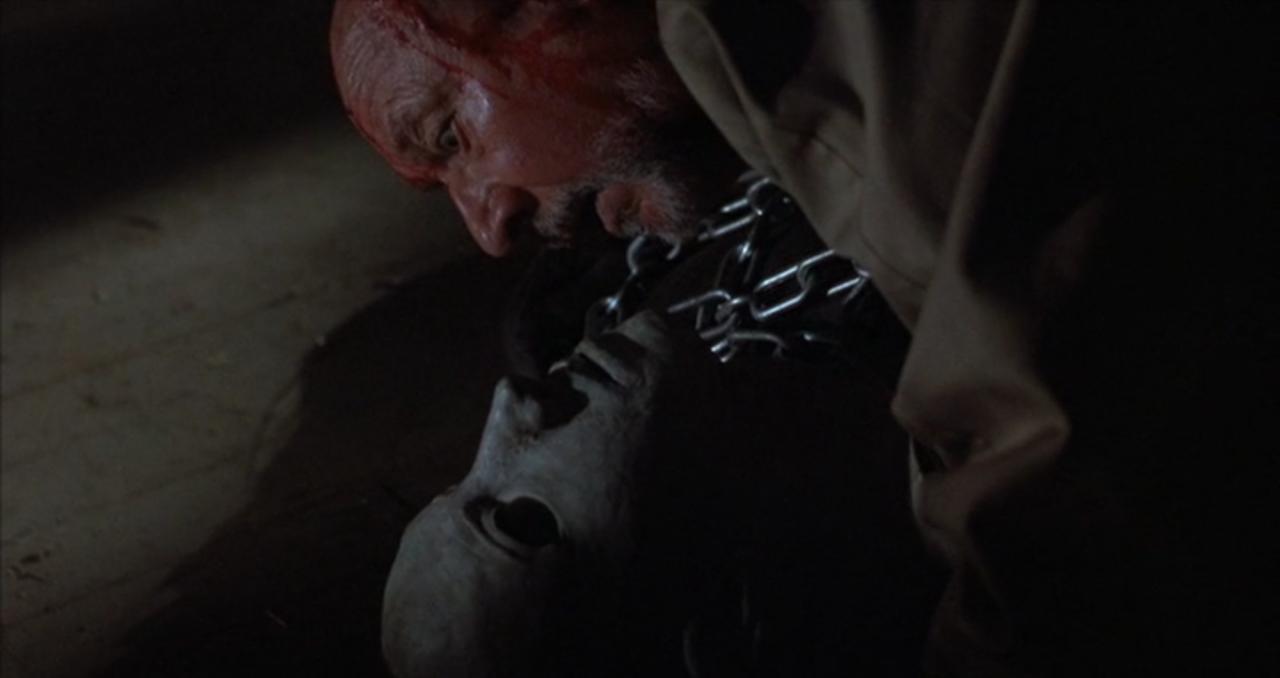
“He was getting tired,” expounded Shanks of Pleasence and the scene, which finds the actor’s character of Loomis dropping a chain net onto Myers before striking him repeatedly, “and he caught me (with the prop), and blood was running out of my mask, and (stunt coordinator) Don Pike ran over asked if I was OK. I said that I was, and not to worry about it, and not to say anything (to Pleasence). But the next day my eyes were black, and that’s a pretty good sign that you broke your nose.”

Aside from that unfortunate incident, Shanks recalls that working with the actor, “Was great. That scene where we were on the staircase (in the Myers house) and he’s talking to me – I swear I was getting lulled by his voice. It’s almost hypnotic, just listening to him. And (even at his age) he wanted to do all his own stunts. So when I slam Loomis into the window (in the film)? That was actually Donald Pleasence.”

 A famously committed actor, the classically trained Pleasence’s desire for authenticity was additionally illustrated in his request to Shanks for him to remain on set – for a scripted scene in which the latter doesn’t appear.

“They were to shoot the scene which takes place right after I wreck the car (at the Tower Farm), and they had wrapped me for the night,” remembers Shanks. “And there was a knock on the door and I answered it. It was Donald and he said, ‘Might I impose on you? I have to shoot the scene where I’m talking to you and I won’t see you, but I just want to know that you’re out there. Would you mind?” I’d already wrapped for the night, but I was like, ‘It’s OK. Cool.’ So I was out there in the trees when he’s saying, “If you want to get rid of this rage, Michael, go home. Go home. Go to your house.’”

Shanks also holds fond recollections of the film’s young lead Danielle Harris, who had returned to reprise her role of Jamie Lloyd in Halloween 5, which she’d originated in its predecessor.

“I thought she was a trooper,” effused Shanks. “I mean, for eleven years old, she was like a little person. She was always there, and she always wanted to do her own stunts.”

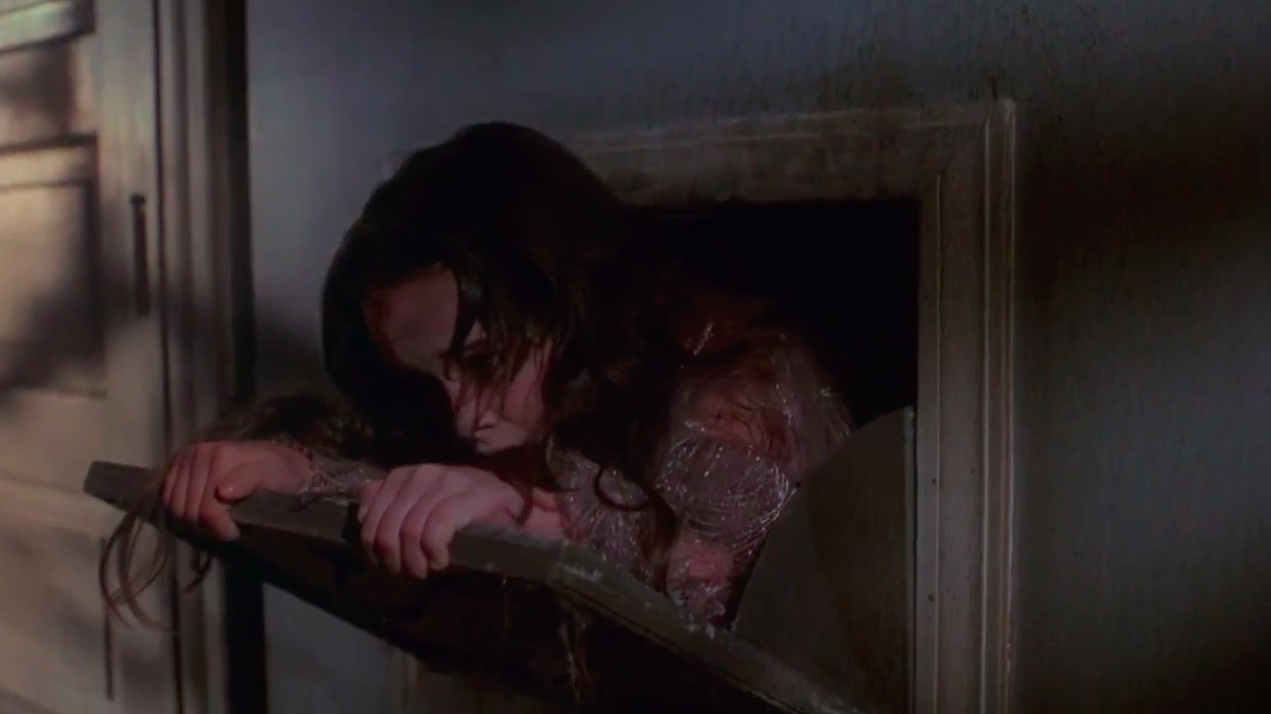
One of those stunts required Danielle’s character to be marauded by Myers while trapped within a metal laundry shoot, while The Shape stabs violently through it with an actual butcher knife.

Danielle Harris in Halloween 5: The Revenge of Michael Myers

“That whole thing, she wanted to do it,” offered Shanks of the sequence, “And I was stabbing blind. I couldn’t see where she was. So we worked it out, and I put marks on the inside where she had to be, and I would stab through it.”

 “Even when we were doing the chase (at the farm), she wanted to be there. I was tearing up the place in that car (with her running in front of it), and there was so much fog!”

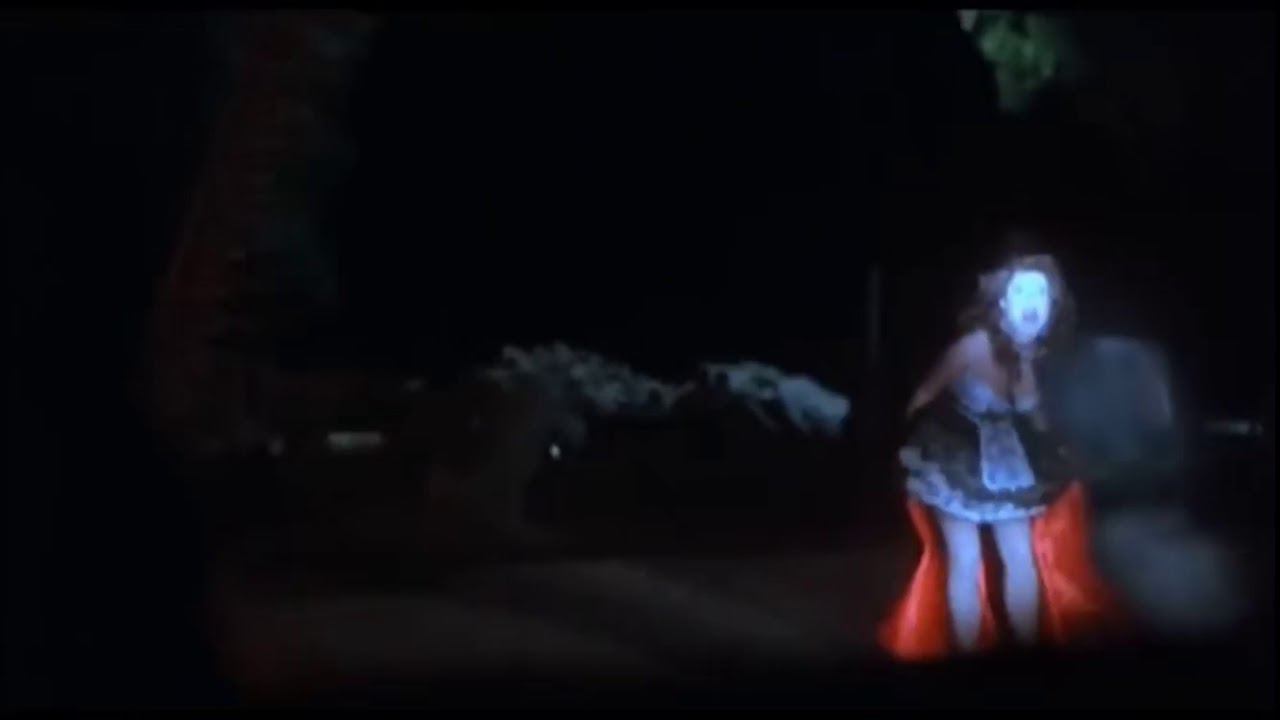
Inarguably one of the more visually arresting moments of the film, the scene finds Myers, having previously dispatched the character of Mike and having stolen his prized 66’ Camaro, chasing down not only Harris, but actors Jeffrey Landman and Wendy Kaplan (the latter in the role of Tina Williams) in it. And as Shanks tells it, it was for Kaplan that things got a bit dicey.

Wendy Kaplan in Halloween 5: The Revenge of Michael Myers

“Well, we had very few doubles,” Shanks said of the production’s apparently anemic approach in hiring stunt people, “(and for that scene) we were using the car for lighting. (Cinematographer) Rob Draper was in the back seat, and we had the headlights on Wendy and we were chasing her, so we had to be fairly close. So we had done it three times, and she asked Rob between takes, ‘When does the camera see my face?’ And Rob said, ‘Well, I really don’t see it.’ So, I think it was on the fourth take that she turned towards us (during the chase), and when she did she stepped on her cape, and it pulled her down and screamed. My heart was jumping out of my chest. I said, “My god!” and slammed on the brakes. I put it right on top of her. I didn’t run over her, but I could have. And I was like, ‘What are you doing?’ And she said, ‘Well, I want them to see my face.’ I told her, ‘It’s not worth getting killed over!’ But she was a trooper too. They all were!”

 “There’s one shot (though from that sequence) that I wish I had,” said Shanks, “where I had the mask on, and there was so much fog that it was coming out of the eye holes.”

Having previously dived into the “Dr. Death” alternate opening, conversation then turned to the other ‘lost’ footage from Halloween 5: the long rumored SWAT team massacre at the hands of Myers.

“Oh, I took out Haddonfield’s SWAT team,” confirmed Shanks. “I killed a whole bunch of people.”

Expounding of the filmed scenes, “They took place at the hospital, the place where Danielle’s character left from,” he offered of the location in Orem, Utah which stood in for Haddonfield Children’s Clinic. “If you remember, the police get on the radio (in the film) and they say, ‘He’s here,’ and the whole SWAT team (which is stationed) at the Myers house gets in their cars and they drive off, and there’s one guy left up (in the house) with Danielle in the bedroom, and then there’s one guy down below in a police car (on the street), and over the radio he hears people screaming. So that’s where the (SWAT massacre) scene was to be – just before that.”

Of the extent of the sequence, Shanks said, “Well, I think we didn’t spend that much shooting it, because it was mostly second unit, with Don Pike directing instead of Dominique. So we were doing it fast.”

Speed of set-ups aside, Shanks does indeed recall the kills.

“There’s one guy, and I mean they show it, when they’re taking out one of the bodies, whose head is twisted around,” recalled the actor. “They put the wardrobe on him backwards, and he looks like his head’s been twisted one hundred and eighty degrees. And another, the direction was, ‘Take an M16 rifle, and you’re just walking through these guys and killing them.’ There’s Donre Samson, a big tall black guy that I kill, and another one, I put the M16 through his head, and another guy, I break his neck and stomp on him, you know. The whole idea was that you’d hear everybody screaming (over the radio) when he’s killing everybody. So we did all these really quick shots. You know: ‘Pick this guy up. Knock this guy down. Stab this guy.’”

In addition to the body count Shanks racked up in Halloween 5 as The Shape, he additionally tallied up a few as the film’s other antagonist, the nebulous Man in Black, a character whose identity and connective tissue had yet to be determined at the time of filming.

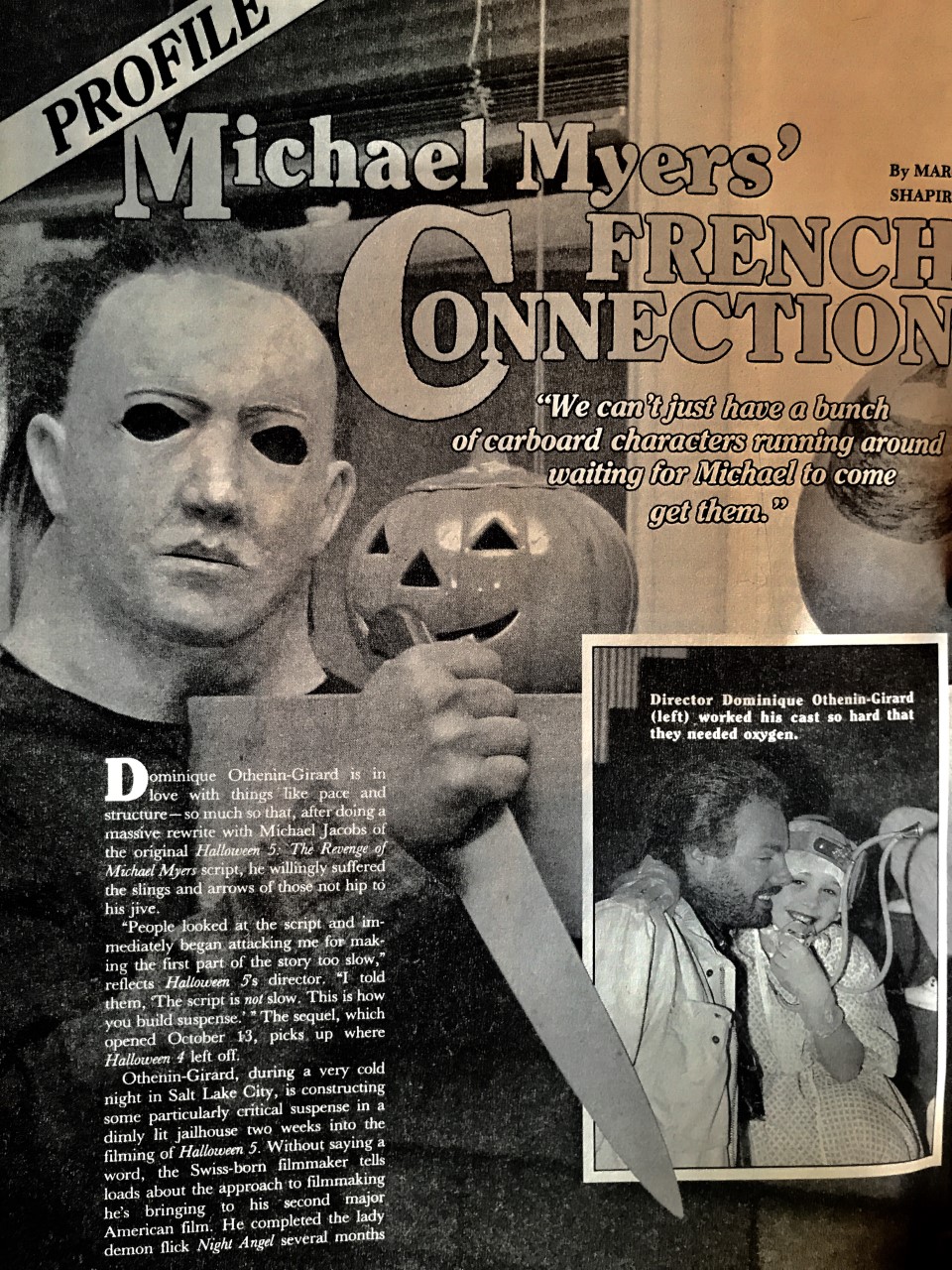
Gorezone Magazine. January 1990. Issue #11.

“Well, I wasn’t sure where they were going with that,” said Shanks of the conceit, “because in the scene where Danielle’s in the coffin, we were shooting stuff where I didn’t have the Myers mask on. And I was asking (executive producer) Moustapha (Akkad) about it, and he was like, ‘I’m not going to use the footage here, I’m going to use it later.’ So my thought was that in Halloween 6 that they’d cut back to scenes that were in Halloween 5 that would show that the Man in Black (and Myers) were the same person. Because later (after production) when Moustapha had called me and said, ‘We’re thinking about doing Halloween 6, and we would like you to go out and promote part 5,’ he also said, ‘but don’t say anything about the Man in Black.’”

And while Shanks would not return to reprise either role in 1995’s Halloween 6: The Curse of Michael Myers (those would go to George P. Wilbur and Mitchell Ryan as Myers and the Man in Black, respectively), the actor said of working with Halloween 5’s director Othenin-Girard (whose unique stamp on the franchise forced many a challenge for its immediate follow-up), “If you look at Halloween 5, it has certain artistic qualities to it, which is what he brought to it. You know, there’s little inner meanings and nuances, that when you watch it, aren’t in the other ones. Like the “Dr. Death” scene: the occult items (in it) happened through Dominique. He’d gotten in touch with (local) witches to get them, and he wanted it shot on a certain day, or it had to be a certain date, I don’t remember which. But numbers were a big thing with him for some reason. His (hotel) room even had to be have certain number, and his bed had to face a certain direction.”

 “And that’s just what Dominique did.”

 As for what Shanks, now sixty-nine years old (and surprisingly still fit, regardless of the spinal fractures he endured as a stunt man in the 80’s) is up to, “I’m still riding horses,” he said. “I have one friend, and she’s been doing horse rescues and stuff, and so I help her train the horses. You know, just taking it easy.”

“Although,” he added, “She did just start doing Mongolian archery. That’s where you shoot targets with a bow on horseback.”

 “I think I might try that.”

Filed Under: FEATURED, FILM, HALLOWEEN 4, HALLOWEEN 5 (1989), HALLOWEEN VI (1995) Tagged With: A Nightmare on Elm Street 5: The Dream Child, Danielle Harris, Deadly Night, Dominique Othenin-Girard, Don Shanks, Donald Pleasence, Dr. Death, Friday the 13th VIII: Jason Takes Manhattan, Halloween, HALLOWEEN 4, Halloween 4 The Return of Michael Myers, Halloween 5, Halloween 5: The Revenge of Michael Myers, Halloween 6, Halloween: The Curse of Michael Myers, John Carpenter, Michael Myers, Moustapha Akkad, Silent Night, The Life and Times of Grizzly Adams, Trancas International Films

Exclusive Interview: Halloween 5’s Don Shanks Speaks! – Part 2

April 2, 2019 by Sean Decker

In 1989, director Dominique Othenin-Girard’s Halloween 5: The Revenge of Michael Myers polarized Halloween fans. From the introduction of the character of the Man in Black and the early beginnings of The Cult of Thorn mythos to a psychic connection between uncle and niece, this fifth film in the franchise (and the fourth which followed the iconic character of the babysitter-slashing Myers, who first found fame in originator John Carpenter’s seminal 1978 horror classic Halloween) was indeed a departure from its predecessors.

But what of the man who donned the infamous coveralls and mask for this fifth entry? Thirty years since its release, we caught up with stuntman and actor Don Shanks to discuss his experience working on the film, and touched on topics ranging from the film’s alternate ‘Dr. Death’ opening and deleted scenes to working with young lead Danielle Harris, as well as his prolific career in the film and stunt industry, navigating Hollywood as a Native American, and a whole lot more.

Commencing with his role of Nakoma in the 1974 film The Life and Times of Grizzly Adams and kicking into high gear in 1977 in the hit television series of the same name (you can dig deep into Shanks’ beginnings in Part 1 of our interview series here), Shanks told us that prior to Halloween 5 he’d cut his teeth on an entirely different slasher film, the 1984 flick Silent Night, Deadly Night.

“I was in that film quite a bit,” Shanks offered of the movie, which went on to generate four sequels and the 2012 loose remake Silent Night. “A friend of mine was the stunt coordinator on it and he brought me on to double the Santa.”

Directed by Charles E. Sellier, Jr. (who Shanks had worked with on the Adams films and television series years prior), Silent Night, Deadly Night was written by Paul Caimi, and revolves around the character of Billy, who after seeing his parents murdered as a child at the hands of a Santa Claus suit-wearing criminal, goes on a Yuletide spree-killing of his own some years later.

Cashing in on the holiday-themed slasher craze of the time (its predecessors included Bob Clark’s underrated 1974 film Black Christmas and of course 1978’s immensely successful Halloween, as well as their imitators My Bloody Valentine, Friday the 13th Part 2, The Burning and dozens of others), the production too decided to give their killer a narratively related look. Thusly, Silent Night, Deadly Night’s Billy was presented as a none-too-family-friendly axe-wielding Saint Nick, much to the outrage of parents everywhere.

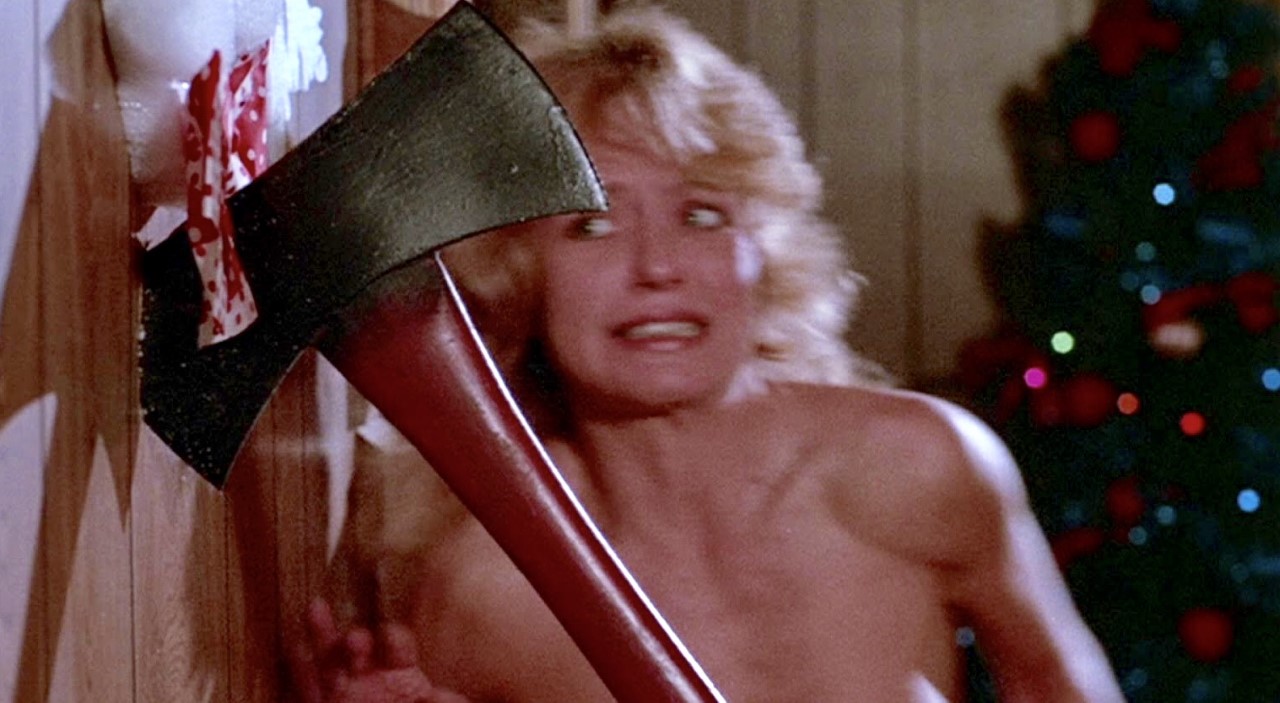
“Everything with the axe was me, and I did all of the stunts required of Santa Claus,” recalled Shanks of his work in the film, which also required him to double many of Santa’s victims as well, “and (often) we were using real axes.”

Of one of those moments when Shanks was asked to use an actual edged weapon, “We were doing one scene with Linnea (Quigley) where she runs to the telephone and (the character of) Billy throws his axe at her, and they wanted me to cut the telephone cord next to her with the axe,” Shanks offered. “I said, ‘That’s a little too close to her for me. There’s a snowman (decoration) right next to her. Let me throw it at that.’ So I first did it with a rubber axe, which didn’t stick and just knocked the fake wall down. So they fixed the wall, and I did it again, and the second time the axe splitt the snowman and it stuck (in the wall).”

 “After the take Linnea said, ‘That was really amazing!’” recalled the actor. “And I said, ‘Well, you know I throw knives and tomahawks.’ And she said, ‘Yeah, but how do you get a rubber one to stick in the wall?’ And I said, ‘The second one wasn’t rubber! They didn’t tell you that I was going to be throwing a real axe at you?’ And she said, ‘No, they didn’t.’”

Linnea Quigley in Silent Night, Deadly Night.
As it turns out, scantily-clad women weren’t the only ones on Santa’s “naughty list” in Silent Night, Deadly Night.

“In another scene, this kid steals a toboggan and is sledding down a hill,” continued Shanks. “So we had a stunt guy wearing a prosthetic head double the kid, and we put a ghost neck on the top of his own head and built his shoulders up, and I took the real axe and cut his (prosthetic) head off with it. So like I said, we were using real axes.”

 Such holiday mayhem was the cause of much controversy on November 9th, 1984, when the film was released to theaters. Lambasted by critics and picketed by parental groups for its content (and television trailers, which aired during hours of family-friendly programming), the TriStar film was pulled from theaters six days into its release. (Wes Craven’s A Nightmare on Elm Street was incidentally released the same day – to less vitriol and far more fanfare).

In the years following Silent Night, Deadly Night, Shanks found work in the television films Louis L’Amour’s Down the Long Hills and Stranger on My Land, as well as the television series Werewolf, before landing the role he’s most known to genre fans for: that of The Shape in 1989’s Halloween 5: The Revenge of Michael Myers.
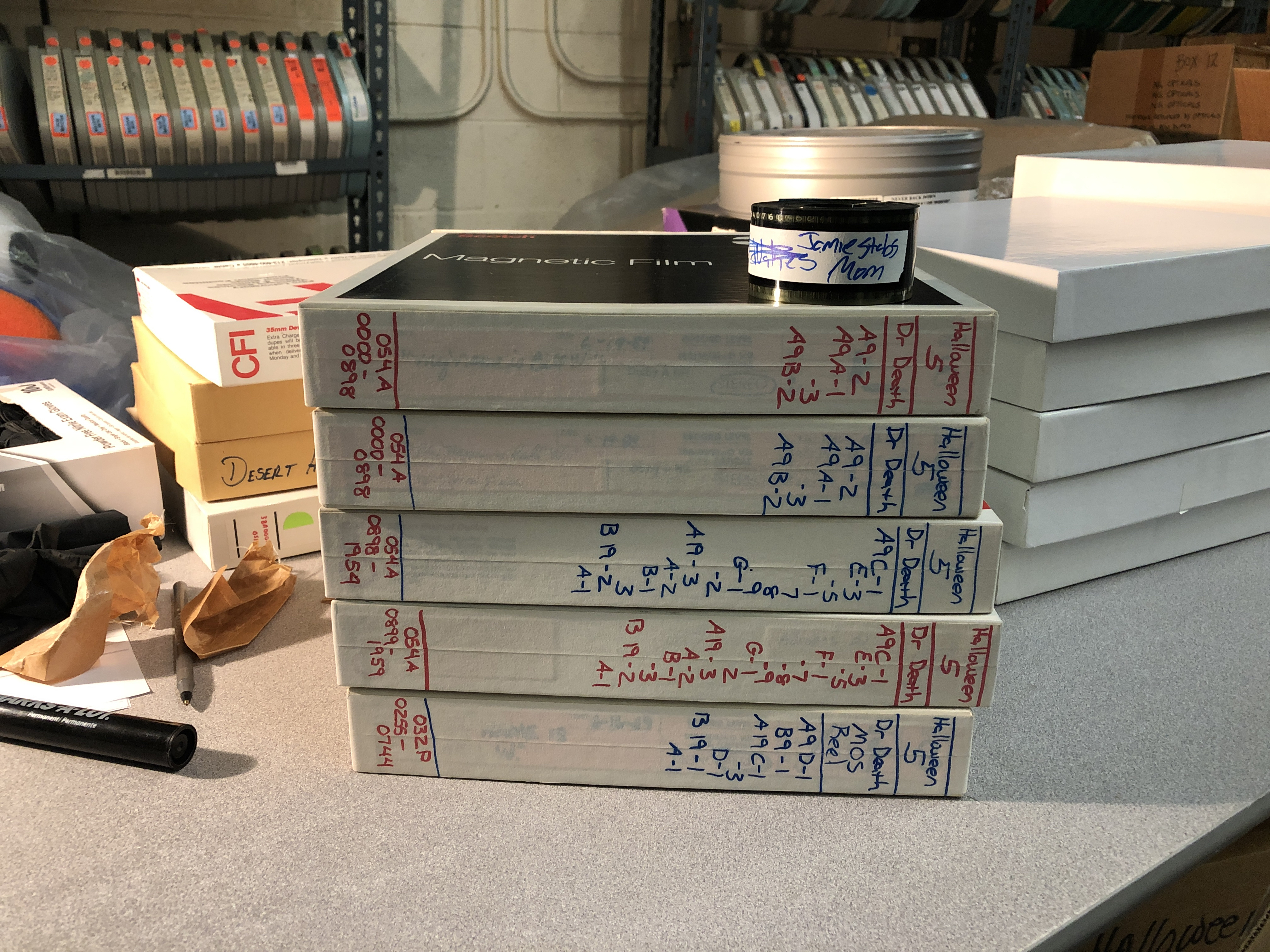
Of that casting, Shanks recalled, “What it was, was that I had worked with stunt coordinator Don Pike. We had done a CHiPS episode together and had become kind of friends, and then later I was here in Salt Lake City, and he called me and said, ‘We’re doing this movie and I wanted to know if you were available to do stunts.’ I go, ‘Yep, sure.’ And so he calls me back ten minutes later and says, ‘The director would like to talk to you.’ I asked, ‘About doing stunts?’ He says, ‘Well, we’re doing Halloween 5 and we’re considering you to play Michael Myers.’ I go, ‘That’s cool.’ So I went in and talked to (the director) Dominique, and after a little bit he says, ‘I want you to walk for me like wood through water.’ I thought about it for a minute, and then I did it, and he said, ‘OK, perfect.’”

 “And that’s how I got the role.”

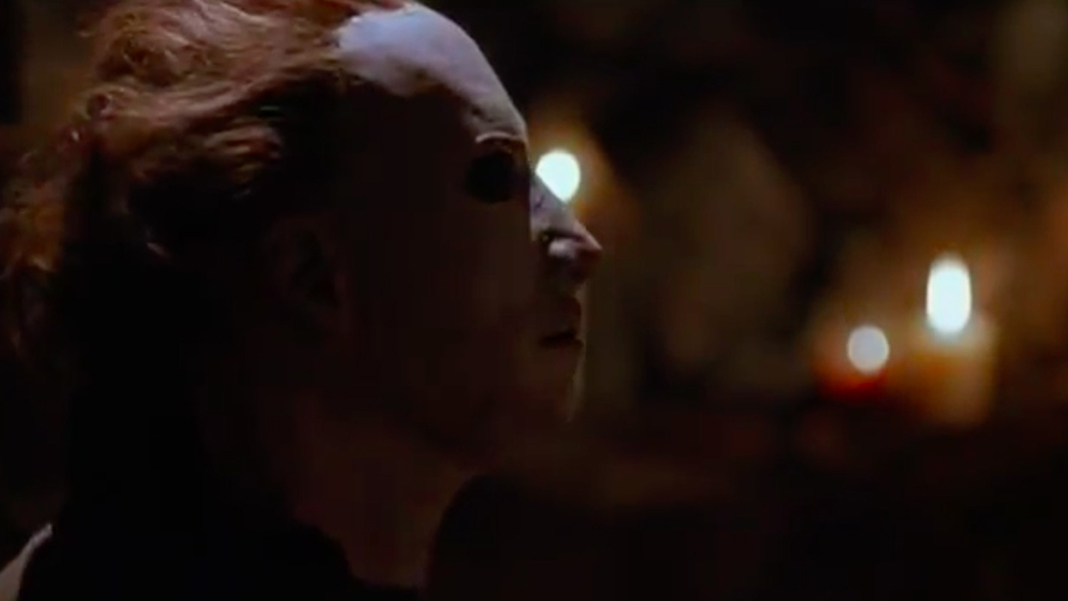
Don Shanks Unmasked in Halloween 5: The Revenge of Michael Myers

 With its predecessor Halloween 4: The Return of Michael Myers having released to box office success in October of 1988, the series’ producers were eager to duplicate that with an October 1989 follow-up, and thusly, Halloween 5 was moved quickly into production. Ideas pertaining to the continuation of the storyline varied wildly. A first draft by Shem Bitterman followed Alan B. McElroy’s established conceit and found the character of Jamie Lloyd to have become pure evil, following the stabbing of her stepmother in the finale of Halloween 4. That concept was however rejected by producer Moustapha Akkad, who felt that fans’ interest lay in the story of Myers (given the box office disaster that was the Myers-less Halloween III: The Season of the Witch, his concerns were warranted). Ultimately, writers Bitterman, Michael Jacobs and director Othenin-Girard all found writing credits on the shooting script, in a story which picked up directly where the previous film had left off: with Myers falling into a mine shaft beneath a hail of gun fire.

“We started filming a week and a half after I got the script,” recalled Shanks of Halloween 5, which commenced principal photography in May of 1989 in Salt Lake City and its surrounding environs.

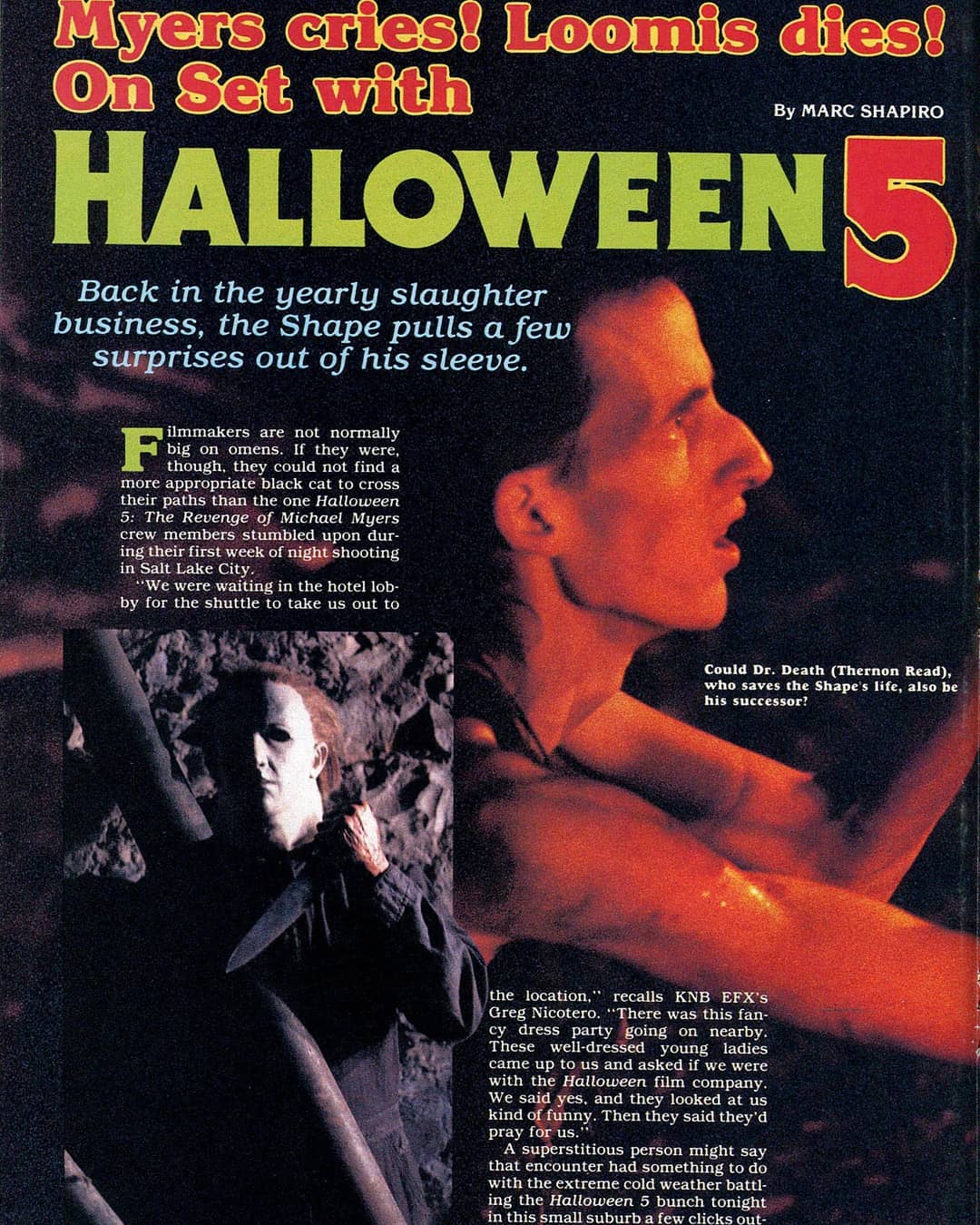
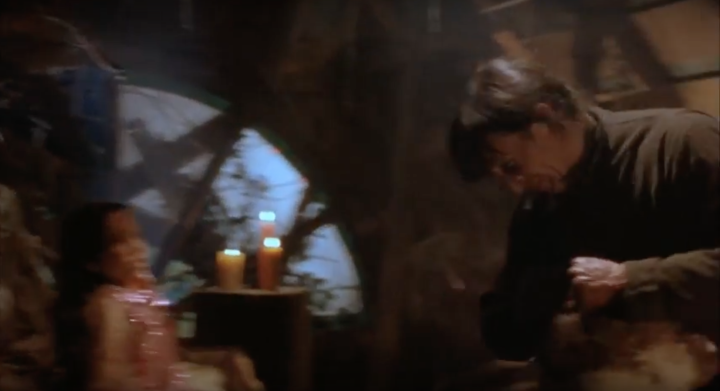
As originally scripted and shot, Myers, in true First Blood fashion, escapes via a fiery opening in the side of a mountain, and riddled with bullets floats down the river to the cabin of Dr. Death, portrayed by local Salt Lake City resident Theron “Uncle Thud” Read, in what has become one of the more discussed ‘lost’ scenes of the film franchise.

Writer’s note: It may not be lost.

“He was a punk comedian here in town,” recalled Shanks of the actor, comic and fixture on the 1980’s SLC punk scene, who is most remembered for his role of Mark Bojeekus in the 1987 comedy Three O’Clock High, and who passed away on July 20th, 2009. “He had a Mohawk haircut, and was very, very emaciated looking.”

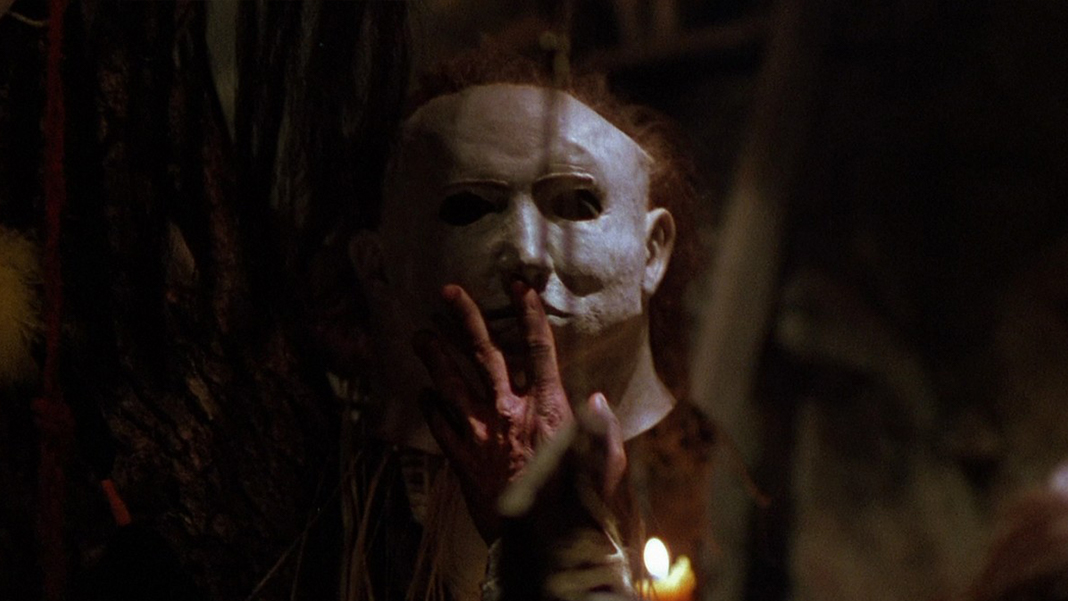
Of the scene, which finds The Shape being discovered by Dr. Death and subsequently brought into the cabin in which a resurrection ritual is conducted, Shanks recalled, “(I was) placed on this stone alter, and all around (the set) were things that the production had gotten from witches, and people that sell you the occult. And there were scrolls and different chants and this and that. And (suspended from) the altar, right above me, was this rock that looked like a stalactite – it was on a string and it would circle. And Dr. Death was doing an incantation on me, and then he tattoos on me the Thorn rune, which is the sign of eternal life. And so he does all these incantations, and on Halloween Eve (one year later) I come back to life.”

“So I put the mask on,” continued Shanks of the results of Myers’ not-quite-grateful response to his resurrection, “and I grab Dr. Death by the throat and pick him up over my head and break his back, and then put him on the altar, and take the stalactite and I go through his chest with it. I thought it was one of my better kills. But (later) Moustapha thought it was too much of the occult type thing. So they decided to shoot it differently.”

Gone was Dr. Death, now replaced by actor Harper Roisman who would in the theatrical release portray an elderly mountain man living in the same cabin (in a direct homage to 1935’s Bride of Frankenstein), as were any signs of the occult, with a talking parrot taking their place.

Of Reads’ performance as Dr. Death, “It was eccentric,” offered Shanks, “and if you saw it you would just go, ‘Wow, that guy looks really weird.’ But it kind of gave the film a little more of an artistic and avant-garde (touch). I mean, it worked perfectly. For what we were doing and the way the (occult) set looked, you want something that isn’t the norm. And the old guy, when we re-shot the opening, Othenin-Girard wasn’t even there. We shot that the last day (of production). I think it was (line producer) Rick Nathanson that directed it. Or it might have been (first AD) Kelly Schroeder. But I’m pretty sure Dominique was not there.”

Fangoria Magazine. November 1989. Issue #88.
 Other interesting changes to Myers included those that were visual, as evidenced by The Shape’s mask itself. As designed and provided by Robert Kurtzman, Greg Nicotero and Howard Berger of K.N.B EFX Group (who also served as the film’s special makeup supervisors), Myers’ visage took on an arguably more malevolent look than the ones which had preceded it.

“There were some changes to it after I’d been cast,” said Shanks of the mask. “I believe it had been sculpted off of a mold of Nicotero, and my head’s a little bigger than his. And then Moustapha thought that the nose needed work, so they changed that. And then we put makeup sponges underneath the neck so it would flare out more, because it form-fitted (without them), and it looked more like a face than it did a mask.”

 “And then of course we had to change it again later after Donald Pleasence had broken my nose.”

 In our upcoming Part 3, Shanks talks working with Danielle Harris and Pleasence (and his hearty swing) in Halloween 5: The Revenge of Michael Myers, those infamous ‘lost’ SWAT massacre scenes, a near fatal Camaro mishap, his introduction to the Halloween fan base, and much, much more.


Filed Under: FEATURED, FILM, HALLOWEEN 5 (1989) Tagged With: Black Christmas, Bob Clark, Danielle Harris, Deadly Night, Dominique Othenin-Girard, Don Shanks, Donald Pleasence, Dr. Death, Friday the 13th Part 2, Greg Nicotero, Halloween, HALLOWEEN 4, Halloween 5, Howard Berger, John Carpenter, lost footage, Michael Myers, Robert Kurtzman, Silent Night, Slasher films, The Burning

John Carpenter to Receive the Prestigious Golden Coach Award at Cannes Director’s Fortnight 

March 29, 2019 by Sean Decker

According to Variety, Halloween director and horror master John Carpenter is set to receive the 2019 Golden Coach Award (Carrosse d’Or) at the Director’s Fortnight sidebar of the Cannes Film Festival on May 15th.

In its letter to Carpenter, The French Directors’ Guild, which chooses the recipient of the award, called the filmmaker “a creative genius of raw, fantastic and spectacular emotions,” and when on to say that each of his films “enhances the irresistible delight of staging. In each of them, the work on space, on what is off-screen, on the visible and on the invisible, is constantly renewed and regenerated in order to redefine fear – a fear that is always prone to trigger emotions in characters and actors who have now become iconic.”

Past recipients of the award include Martin Scorsese in 2018 and Werner Herzog in 2017.

Congratulations John from HalloweenMovies.com and everyone at Trancas!

Filed Under: HALLOWEEN (1978), NEWS Tagged With: cannes, Carrosse d'Or, Christine, Escape from New York, French Directors Guild, Golden Coach Award, Halloween, In the Mouth of Madness, John Carpenter, Martin Scorsese, Masters of Horror, Michael Myers, Starman, The Fog, The Thing, They Live, Warner Herzog

  • « Go to Previous Page
  • Go to page 1
  • Interim pages omitted …
  • Go to page 5
  • Go to page 6
  • Go to page 7
  • Go to page 8
  • Go to page 9
  • Interim pages omitted …
  • Go to page 12
  • Go to Next Page »

Primary Sidebar

FOLLOW US ONLINE

  • Facebook
  • Instagram
  • Twitter
  • YouTube

Feature Articles

Halloween Ends to Debut in Theaters and On Peacock October 14, New Poster & More!

With the recent news that Halloween Ends will premiere both in theaters and on Peacock October 14, … [Read More...] about Halloween Ends to Debut in Theaters and On Peacock October 14, New Poster & More!

The First Official Trailer for Halloween Ends is Here!

You wanted it... you got it! From director David Gordon Green, Trancas International Films, Miramax … [Read More...] about The First Official Trailer for Halloween Ends is Here!

New Featurette Halloween Kills “Warriors” Showcases the Strodes

Just ahead of the October 15, 2021 release of Halloween Kills, Universal has released a new … [Read More...] about New Featurette Halloween Kills “Warriors” Showcases the Strodes

MORE FEATURED ARTICLES

Footer

  • Facebook
  • Instagram
  • Twitter
  • YouTube
Privacy Policy | Terms of Use | Legal Notices

Copyright © 2026 · Compass International Pictures · All Rights Reserved. · Log in

HalloweenMovies.com could care less about cookies, but because this is a [WORDPRESS] site, they are present solely to provide you with the best experience on the website, which if you continue to use this website you acknowledge you are agreeable to this. Please also know that HalloweenMovies.com will NEVER sell or utilize your data in any way.    Ok    Privacy Policy